Seasons
When is cruise season around the world?
Not one season. Twenty-four systems, twelve months, and four quite different reasons a region is or is not sailing.
The short answer
Somewhere in the world it is cruise season every month of the year. What changes through the year is where — and it changes for four separate reasons that are usually collapsed into one.
A region can be physically unreachable, as Antarctica is for most of the year. It can be perfectly navigable but empty of ships, as Alaska is in January. It can be sailed in all twelve months, as the Caribbean and the Nile are. Or its window can move from year to year with water levels, as the Elbe's and the Mekong's do. Only the first of those is a closed season in any physical sense.
By The SnapVoyages TeamPublished September 2026
The idea that governs everything below
Four states, not one calendar
Almost every published cruise-season answer is a list of months. A month list cannot tell you whether the water is frozen or the ships are simply somewhere else — and those two situations behave completely differently.
- Physically closed
- Outside the window the region cannot be reached, whatever a fleet planner would prefer. Sea ice is almost the only mechanism that does this.
- Closed by deployment
- The water is navigable all year, but the ships are somewhere else. This is a commercial decision about where a mobile asset earns, not a physical limit.
- Year-round
- Sailed in every month. Conditions and demand still move through the year, but nothing closes.
- Variable by year
- Whether a given week sails depends on water level, ice or scheduled infrastructure work, and is decided within the year rather than by the calendar.
The distinction matters because it predicts what happens next. If a region is closed by deployment, capacity can move back into it when demand justifies the repositioning voyages: this is how Alaska went from a handful of summer sailings to a large seasonal fleet, and how the Mediterranean's western basin acquired a genuine winter programme. If a region is physically closed, no amount of demand changes the answer, because the limiting factor is sea ice and a ship cannot negotiate with it.
Year-round systems behave differently again. They have no closure to explain, so the only thing moving through their year is condition and demand — and those are the two things most likely to be sold to you as a season. And variable systems, mostly rivers, have a nominal season whose real edges are set inside the year by rainfall, snowmelt and scheduled engineering work.
Read the matrix below through those four states and the pattern stops looking like twenty-four arbitrary calendars.
The whole picture, in one vocabulary
Twenty-four systems, twelve months
Every ocean region, river system and expedition area on this site, measured against a single question so the rows can honestly be compared with one another.
Twenty-four cruise systems through twelve months
Each cell answers one question and one only: is this system broadly being sailed by mainstream operators in that month? It says nothing about weather, price or how busy a ship will be. Where this differs from a region page's own chart, the region page is answering a different question.
- Broadly scheduled
- Narrow or partial
- Not broadly scheduled
Read the whole matrix as a table, with the qualifier for each system
| System | State | Broadly scheduled | What sets the window |
|---|---|---|---|
| MediterraneanOcean | Closed by deployment | Widest choice April–October; western winter sailings continue | Temperature, sea state and daylight — not access. The Mediterranean never closes. Winter sailings concentrate in the western basin while much of the fleet leaves for the Atlantic and Caribbean. |
| CaribbeanOcean | Year-round | All twelve months | Nothing limits access; northern winter demand shapes the peak. The Atlantic hurricane season runs 1 June to 30 November and overlaps with normal operation. It changes routing and risk, not availability. |
| AlaskaOcean | Closed by deployment | Roughly late April to early October | Daylight, cold and seasonally open shore infrastructure. Nothing physically prevents a winter sailing to Southeast Alaska. There is no mainstream schedule because the ships are earning elsewhere. |
| Norwegian FjordsOcean | Closed by deployment | May–September, plus a separate small winter programme | Daylight and temperature; the Arctic section is narrower still. The winter sailings are a different product — coastal and aurora-oriented — rather than an extension of the summer fjord season. |
| Baltic & Northern EuropeOcean | Closed by deployment | May–September | Daylight and temperature, with ice risk in the far north. Port seasons and the northern summer, not the water, define the window. The fleet redeploys south for the winter. |
| Southeast AsiaOcean | Year-round | All twelve months | Monsoon phases, announced annually rather than fixed. Asia is two climate systems under one label, so it cannot carry one honest row. This is the tropical half: Singapore, Malaysia, Thailand, Vietnam. |
| Northeast AsiaOcean | Closed by deployment | Concentrated in spring and autumn | Temperate seasonality; western North Pacific typhoon activity. The Japan Meteorological Agency monitors typhoons year-round and publishes no official season dates. Any 'typhoon season' month range is a convention, not a definition. |
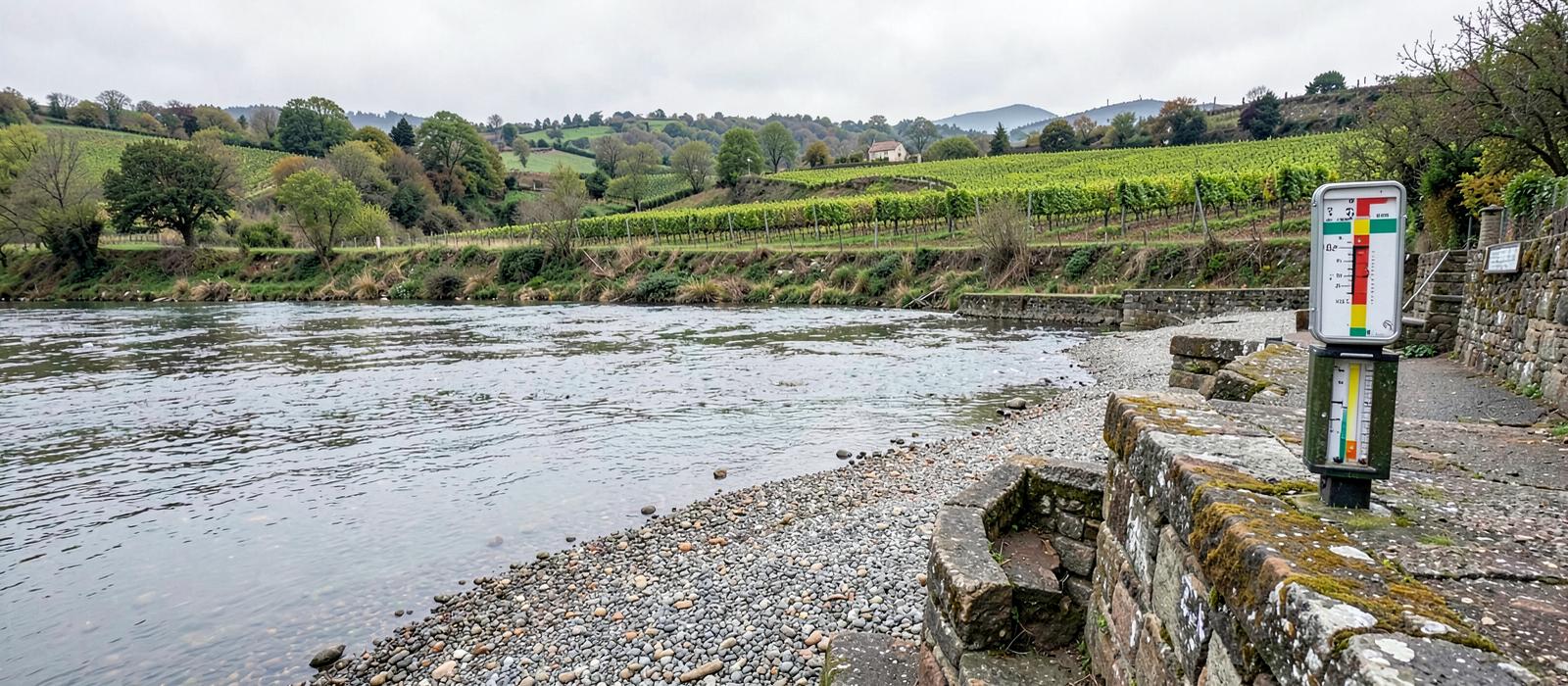
| RhineRiver | Variable by year | April–October, plus a December market product | Weather and daylight — with low and high water as in-season risk. The Kaub gauge is the classic bottleneck: too little water and a ship cannot pass, too much and it cannot clear the bridges. Neither follows a calendar. |
| DanubeRiver | Closed by deployment | April–October, plus December | Weather and daylight on an impounded, locked river. Lock maintenance closures are scheduled annually and move from year to year, so they are published rather than predictable. |
| Main & Main–Danube CanalRiver | Closed by deployment | April–October, plus December | Fully canalised, so weather rather than hydrology. The canal is drained in sections for lock work each spring; the dates are announced each year and are not a fixed season boundary. |
| MoselleRiver | Closed by deployment | April–October | Weather; the river itself is barraged and dependable. With locks and barrages the whole way from Metz to Koblenz, low-water risk here is much lower than on the neighbouring Rhine. |
| ElbeRiver | Variable by year | April–October, water permitting | Low water — the Elbe is channel-trained, not impounded. This is the European river where a booked sailing is most likely to be altered mid-season, because there are no dams holding a depth. |
| SeineRiver | Closed by deployment | April–October, plus a short December period | Weather and daylight on a locked, regulated river. Regulation makes depth dependable; high-water events in the Paris basin are still managed by the waterway authority. |
| Rhône & SaôneRiver | Closed by deployment | March–November | A southern climate lengthens the window at both ends. Fully canalised, but the waterway authority still issues periodic restrictions. Regulated does not mean never disrupted. |
| DouroRiver | Closed by deployment | March–November | Climate; five dammed locks hold a published minimum draft. High-inflow events can still restrict passage even though the navigation channel is dammed throughout. |
| NileRiver | Year-round | All twelve months; the comfortable months are October–April | The Aswan High Dam removed the annual flood cycle. Summer in Upper Egypt is a comfort question, not an access question. The river is engineered and navigable throughout. |
| MekongRiver | Variable by year | Broadly August–April, following the water | The monsoon flood season, which the MRC dates June to November and which carries 70–80% of the annual flow. Reach-dependent. The delta is not the upper river: upstream reaches need high water, while parts of the delta remain navigable when they do not. |
| Upper MississippiRiver | Physically closed | Roughly late March to late November | Ice — the upper river genuinely closes. Closing and reopening dates are set by ice conditions and published each year by the waterway authority, not fixed in advance. |
| Lower MississippiRiver | Year-round | Effectively all year, subject to river stage | High-water and low-water events rather than a season. One river, two answers. Treating the Mississippi as a single season is the most common factual error made about it. |
| Columbia & SnakeRiver | Closed by deployment | March–November | Dam-regulated, so weather rather than water level. An annual lock maintenance outage takes the system out of service for several weeks in late winter; the dates move each year. |
| AntarcticaExpedition | Physically closed | A seven-month austral summer season, October to April (IAATO) | Sea ice. Antarctic ice maximum in September, minimum around late February. Outside the window this is not a deployment choice. The ice edge decides, and once ships are there, visitor numbers ashore are capped site by site. |
| ArcticExpedition | Physically closed | Svalbard roughly late May–September; the Northwest Passage narrower still | Sea ice, with the Arctic minimum in September. Three sub-areas, three different windows. Svalbard's operating rules were tightened from 1 January 2025 with further changes from 2026. |
| GalápagosExpedition | Year-round | All twelve months | No ice and no closed season; a park permit system sets capacity. The constraint here is regulatory rather than climatic: itineraries are fixed and approved, so the limit is permits, not weather. |
| KimberleyExpedition | Closed by deployment | The dry season, which DBCA gives as May to October | The northern Australian wet season, November to April, which is also the cyclone season. Tides shape this coast as much as rainfall: the tidal range is extreme, and it governs when a given landing is possible at all. |
Season explorer
Pick a month and see where the fleet is working
The same twenty-four systems, read one month at a time. A system is shown as broadly scheduled, narrow or partial, or not broadly scheduled — nothing here says a month is good, warm, cheap or quiet. Select a system to see the mechanism that puts it in that state.
In Jan: 7 broadly scheduled · 3 narrow or partial · 14 not broadly scheduled
Ocean
River
Expedition
- Broadly scheduled (Scheduled)
- Narrow or partial (Partial)
- Not broadly scheduled (Not scheduled)
Select a system above to read why it sits in that state in Jan.
A note on why this matrix exists at all. Each region, river and expedition page on this site carries its own twelve-month chart, and those charts were built to answer the question that mattered on that page. Alaska's shows availability. The Caribbean's is explicitly about relative passenger demand, because availability there is flat. The Nile's leans towards comfort, because an engineered river never stops being navigable.
That is defensible page by page and misleading when the charts are lined up. So this matrix asks one narrower question of all twenty-four systems, and answers nothing else. Where a cell here disagrees with a region page's chart, both are correct: they are measuring different things, and the region page's own note says which.
Scheduled is not the same as pleasant, cheap or quiet
A month can be broadly scheduled and still be the hottest, wettest or busiest month of that system's year. Those are separate questions, answered on the region pages.
Mechanism one
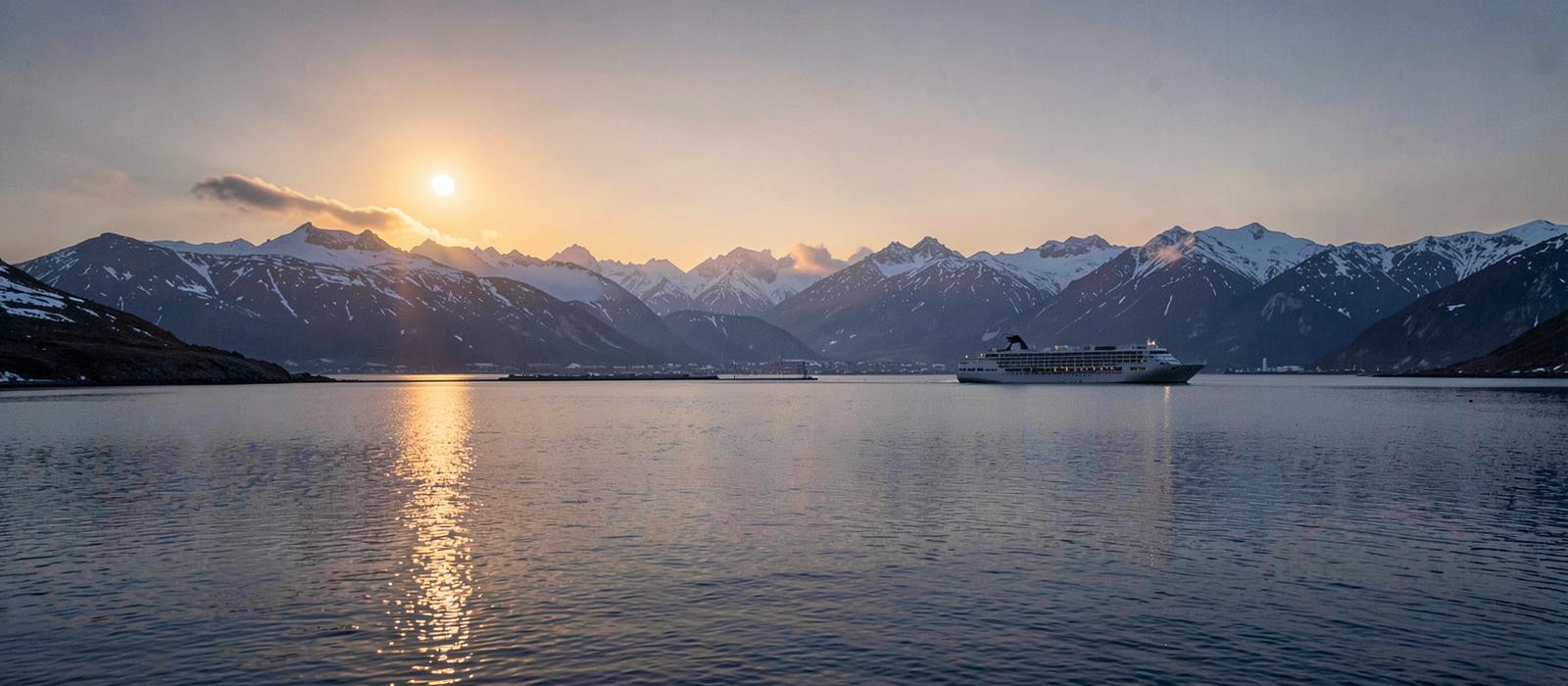
Latitude sets the length of the day, and the day sets the season
Why do high-latitude seasons collapse into a few midsummer months?
Above about 60° north, daylight matters as much as temperature. A fjord in March can be navigable while the scenery the summer voyage exists to show is in darkness for most of the sailing day, and while many shore operations that make a port call work are closed for the winter.
This is why the Alaskan, Baltic and Norwegian summers are so tightly centred on the solstice rather than on the warmest weeks. The warmest water in Southeast Alaska arrives after the peak of the daylight, but the season is built around the light. It is also why these windows are broadly symmetric around midsummer, while a temperate season such as the Mediterranean's is not.
The far north has a second, separate product that is often confused with a season extension. Norway's winter coastal sailings exist for the aurora and the polar night, which are the opposite of the summer proposition. They are a different voyage using the same coast, not the fjord season stretched.
Mechanism two
Tropical cyclones change routing, not availability
The most consistently misread mechanism in cruising. A cyclone season is a climatological convention describing when storms are likely — not a period during which a region is shut.
The Atlantic hurricane season is defined as 1 June to 30 November. Those dates are a convention chosen because they bracket the overwhelming majority of Atlantic tropical activity, not a boundary that storms respect. Caribbean cruising continues throughout, while a hotel on an island cannot move at all. What the season actually changes is routing: itineraries are rewritten mid-voyage, calls are swapped, and the published route is treated as an intention rather than a promise.
Australia's cyclone season, 1 November to 30 April, has a different effect only because of what it coincides with. On the Kimberley coast it overlaps with the northern wet season, which Western Australia's parks agency gives as November to April, with the dry season running May to October. The combination — not the cyclones alone — is what makes the window a dry-season one.
The western North Pacific is the instructive case. The Japan Meteorological Agency monitors typhoons all year and publishes no official season dates. A range such as "June to November" is therefore a statistical or operational convention, not an official season, and it should be read that way.
1 June – 30 November
A climatological convention covering the great majority of Atlantic tropical activity. Not a closure, and not a rule about any individual sailing.
No official dates exist
Year-round monitoring, no declared season. The absence is itself the fact worth knowing.
| Official dates | Effect on operation | What a traveller sees | |
|---|---|---|---|
| Caribbean / Atlantic | 1 June – 30 November | None on availability. Ships sail all twelve months. | Itinerary changes at short notice during the season; the strongest climatological weeks fall in late summer and September. |
| Northern Australia | 1 November – 30 April | Combined with the wet season, it closes the Kimberley window. | A dry-season programme only. DBCA gives the Kimberley dry season as May to October. |
| Western North Pacific | None declared | Continuous risk management rather than a seasonal rule. | Port calls in Japan and the wider region can be dropped in any month when a system tracks through. |

Mechanism three
Polar sea ice is a closure, not a deployment choice
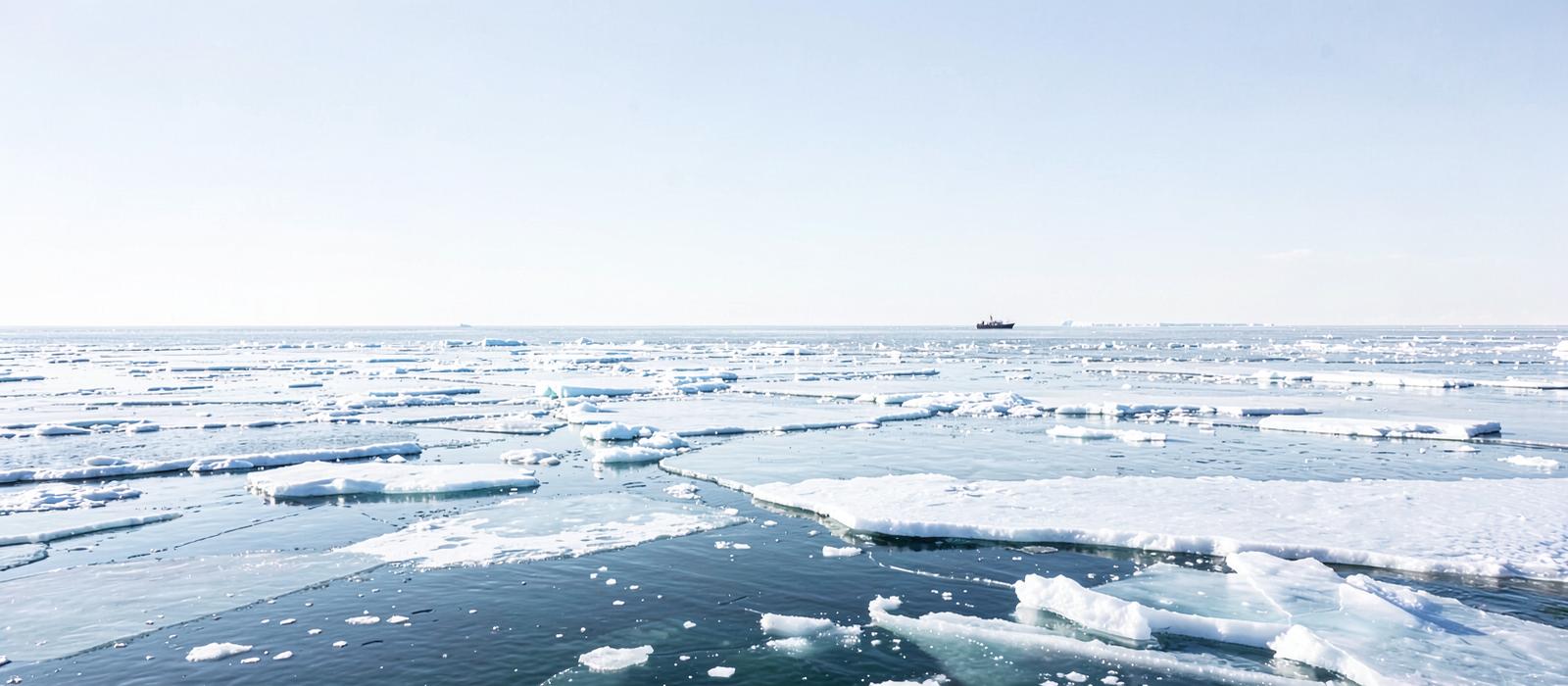
Most mechanisms on this page bend to demand. Polar sea ice does not: it makes a region unreachable regardless of price or fleet planning. Ice closes some rivers too, but only at the poles does it govern a whole cruising system.
Antarctica: an ice window
Antarctic sea ice reaches its maximum extent around September and its minimum towards the end of February. The cruise window sits inside the retreat and the early re-advance. IAATO reports that 98% of Peninsula tourism voyages take place in a seven-month austral summer season running October to April, with the heart of it between November and March. Outside that window, the question of whether a ship should go is not asked, because the answer is set by the ice edge.
What operates inside the window is regulated as well as constrained. Site guidelines adopted through the Antarctic Treaty system cap what a landing can absorb — a typical site guideline allows no more than 100 visitors ashore at any one time, one ship at a time, and one guide for every 20 visitors — so more demand does not simply become more people on a landing beach.
The Arctic: three windows, not one
The Arctic minimum falls in September, which is why the northern polar season runs so late relative to the northern summer. Svalbard's west coast opens first, roughly late May; the Northwest Passage opens last and briefest, around August into early September, and in some years does not usefully open at all.
The Arctic also differs from Antarctica in governance. National regulation applies: Svalbard's rules for visiting vessels were tightened from January 2025 with further changes following, so the operating window is shaped by law as well as by ice.
Both poles are summer-only; only one of them is a fleet-planning decision
Antarctica is closed because it cannot be reached. Alaska is closed because the ships are working the Caribbean. Both look identical on a month list, and they are not the same fact.
Mechanism four
On a river, the season is a hypothesis about the water
River systems fall into a small number of engineering types, and the type predicts what kind of disruption a booked sailing is exposed to.
Type one
Free-flowing and channel-trained
Depth depends on rainfall and snowmelt. The Elbe is the clearest European example, and the Rhine has a famous bottleneck at Kaub.
Consequence
In-season interruption
Too little water and a ship cannot pass; too much and it cannot clear the bridges. Itineraries are altered, coaches substituted, or ships swapped mid-cruise.
Type two
Impounded and locked
Barrages hold a working depth: the Moselle, the Main–Danube Canal, the Rhône, the Douro, the Columbia, the Nile below Aswan.
Consequence
Scheduled outage
Dependable water, but the locks need maintenance. Sections are drained on published annual dates that move from year to year.
This is why a river "season" of April to October should be read as a statement about weather and daylight, not about navigability. The weeks that actually fail are decided inside the season by a gauge reading or an engineering notice — and both are published, which is the useful part. Water levels for the German rivers are public. Lock status on the Danube is public. Annual maintenance outages on the Columbia and Snake are announced in advance.
Two rivers deserve their own note. On the Nile, the Aswan High Dam largely regulates the historic annual flood, so the river is navigable in all twelve months and the familiar October-to-April framing is mainly about summer conditions and demand in Upper Egypt rather than an annual navigation closure. The Mississippi is not one river for this purpose at all — the upper reach genuinely closes with ice each winter, while the lower reach is effectively year-round. Any single "Mississippi season" is wrong before it is written.
The Mekong is the clearest case of a hydrological rather than calendar season. Its navigability follows the monsoon flood season, which the Mekong River Commission dates June to November and which carries some 70–80% of the river's annual flow. It is also reach-dependent: the upstream sections need high water in a way the delta does not.
| Depth comes from | Typical failure mode | Where it is published | |
|---|---|---|---|
| Free-flowing | Rainfall and snowmelt in the catchment | Low water stops passage; high water removes bridge clearance and can trigger a navigation ban | Public gauge readings and forecasts from the waterway authority |
| Impounded and locked | Barrages holding a working depth, which reduces but does not remove hydrological risk | Scheduled lock maintenance takes a section out of service for days or weeks | Annual maintenance notices, published in advance and changing each year |
| Ice-affected | Seasonal freezing of the navigation channel | The reach closes entirely and reopens when conditions allow | Closing and reopening announcements from the navigation authority |
Mechanism five
The fleet is mobile, and that is why the map moves
The first four mechanisms decide what is possible. This one decides what is offered — and it explains more of the world's cruise calendar than any of them.
Northern summer
May to September
Daylight, not warmth, opens the high-latitude systems, and much of the world fleet is deployed north of the tropics in these months.
- Alaska
- Baltic & Northern Europe
- Norwegian Fjords
- Arctic
- European rivers
- North American rivers
- Mediterranean at its widest
Southern summer and the tropics
November to March
Many of the same hulls are working the other half of the planet. Nothing about the northern water changed — the ships left. The Kimberley is the exception in this column: its dry-season programme runs in the northern-summer months, May to October.
- Antarctica
- Caribbean at peak demand
- Nile main season
- Mekong high water
- Mediterranean western winter
A cruise ship is a hotel that can be moved to wherever the demand is. Almost no other accommodation business has this property, and it is the reason the world's cruise map has a seasonal shape at all. A hull working Southeast Alaska in July has to be earning somewhere in January, and that somewhere is typically the Caribbean, the western Mediterranean, Asia or a long southern-hemisphere programme.
The moves themselves are visible as a product: repositioning voyages in spring and autumn are the fleet changing hemispheres, sold as one-way itineraries with a high proportion of sea days. They are not an odd niche — they are the mechanism made purchasable.
This is also why regional capacity is finite in a way that surprises people. A summer region does not simply have "a season"; it has a set number of ships deployed there for a set number of weeks. Deployment is normally announced well in advance of the season, which is why regional capacity is largely settled before booking opens.
Where the simple model breaks
Eight cases that do not follow the pattern
These are not trivia. Each one is a place where the ordinary reading of a season table produces a wrong conclusion.
- The Caribbean's busiest months sit partly inside hurricane season
- Demand is driven by the northern winter, and the storm season is a summer and autumn phenomenon. The two overlap without cancelling each other, which is why 'season' and 'closure' must be kept apart here.
- The Nile is an engineered river
- The annual flood no longer exists. What remains is a comfort and demand pattern, which behaves like a season and is not one.
- Galápagos is limited by permits, not weather
- Operation runs in all twelve months, and the binding constraint is a park-approved itinerary system rather than a weather window.
- The Mississippi has two answers
- An ice-closed upper reach and an effectively year-round lower reach, under one river name.
- Asia is two climate systems under one label
- Tropical Southeast Asia runs all year; Japan, Korea and China concentrate in spring and autumn. One Asia season cannot be stated honestly, so this page states two.
- Norway's winter sailings are a different product
- Aurora and polar-night voyages share the coast with the summer fjord season but sell a different experience. Counting them as a longer season misrepresents both.
- The western North Pacific has no official season
- The monitoring agency publishes no official season dates for this basin. Month ranges quoted for it are statistical or operational conventions rather than an official season.
- European rivers in December are a market, not a climate
- The Christmas-market sailings exist because of a demand event in a handful of cities. They tell you nothing about the river's operating season.
Practical translation
What a published month range actually means
Once you know which mechanism you are looking at, an operator's season dates become readable. The same phrase carries six different meanings.
“Season: May to September” on a high-latitude region
Daylight and shore operations. Expect the shoulder weeks to be genuinely different voyages, with less light and fewer excursions running.
“Year-round” on a tropical region
Availability, not uniformity. The months still differ in heat, rain and storm risk, and the price pattern usually reflects demand rather than conditions.
“November to March” on a polar region
An ice window. The edges are the least certain part of the programme, and early and late departures see a different landscape from the midseason ones.
“April to October” on a river
Weather and daylight. Navigability inside that range is a separate matter decided by gauges and maintenance notices.
“Departs from a new home port this season”
A deployment decision. It tells you where the ship is based for those months, not that the region has changed in any physical way.
“Repositioning”
The hemisphere swap, sold as a voyage. High sea-day ratio, one-way routing, and by definition it happens only in the transition months.
Where this goes next
Follow a mechanism into a region
Each system in the matrix has its own page, with its own geography, its own gateways and its own sourced season record.
The world cruise map
See the same twenty-four systems as geography rather than as a calendar, across ocean, river and expedition.
River systems
Twelve rivers, each with the hydrology and infrastructure that decides its working weeks.
Expedition regions
Where the ice window, the regulation and the operating area are the whole story.
For how published dates relate to the shape of a route, see how cruise itineraries work. For the vocabulary used throughout this guide — gateway, port of call, repositioning, shoulder season — see the glossary.
Sources & verification
Season mechanisms on this page are drawn from meteorological agencies, ice and hydrology services, waterway authorities and protected-area regulators. Industry bodies are used only for facts about their own members' operations, never as evidence about conditions.
- MedCruise — Association of Mediterranean Cruise Ports — read 2026-09-01
- Cruise Lines International Association (CLIA) — read 2026-09-01
- NOAA National Hurricane Center — Atlantic hurricane season climatology — read 2026-09-01
- NOAA AOML Hurricane Research Division — hurricane season FAQ — read 2026-09-01
- U.S. National Park Service — Glacier Bay National Park and Preserve — read 2026-09-01
- Cruise Norway AS — Norwegian cruise port network — read 2026-09-01
- Norwegian Polar Institute — read 2026-09-01
- Cruise Baltic — network of Baltic Sea cruise destinations — read 2026-09-01
- Meteorological Service Singapore — monsoon updates — read 2026-09-01
- JMA RSMC Tokyo — Typhoon Center — read 2026-09-01
- Japan Meteorological Agency — read 2026-09-01
- ELWIS — German waterway and water-level information service — read 2026-09-01
- ELWIS — Kaub gauge water-level forecast — read 2026-09-01
- Binnenschifffahrtsstraßen-Ordnung §17.11 — navigation at high water — read 2026-09-01
- viadonau — Austrian waterway administration — read 2026-09-01
- viadonau DoRIS — Danube lock status — read 2026-09-01
- Wasserstraßen- und Schifffahrtsamt Donau–MDK — read 2026-09-01
- Wasserstraßen- und Schifffahrtsverwaltung des Bundes (Germany) — read 2026-09-01
- Moselkommission — facts and figures — read 2026-09-01
- Wasserstraßen- und Schifffahrtsamt Elbe — read 2026-09-01
- Voies navigables de France (French waterway authority) — read 2026-09-01
- VNF Bassin de la Seine — avis à la batellerie (Seine-basin navigation notices) — read 2026-09-01
- APDL — Douro navigation channel and locks — read 2026-09-01
- Egypt Ministry of Water Resources and Irrigation — read 2026-09-01
- Mekong River Commission — read 2026-09-01
- US Army Corps of Engineers — St Paul District (Upper Mississippi) — read 2026-09-01
- USACE — Notices to Navigation Interests — read 2026-09-01
- US Army Corps of Engineers — Mississippi Valley Division — read 2026-09-01
- US Army Corps of Engineers — Portland District (Columbia locks) — read 2026-09-01
- US Army Corps of Engineers — Northwestern Division (Columbia and Snake locks and dams) — read 2026-09-01
- NSIDC — Sea Ice Today — read 2026-09-01
- IAATO — International Association of Antarctica Tour Operators — read 2026-09-01
- Antarctic Treaty Consultative Meeting — Resolution 4 (2007), ship-based tourism — read 2026-09-01
- Sysselmesteren på Svalbard (Governor of Svalbard) — read 2026-09-01
- AECO — Association of Arctic Expedition Cruise Operators — read 2026-09-01
- Dirección del Parque Nacional Galápagos — read 2026-09-01
- Ecuador — RETANP, Decreto Ejecutivo 827 (protected-area tourism) — read 2026-09-01
- Australian Bureau of Meteorology — tropical cyclone climatology — read 2026-09-01
- Australian Bureau of Meteorology (tides and tropical seasons) — read 2026-09-01
- Western Australia Department of Biodiversity, Conservation and Attractions — read 2026-09-01