Skip to content
SnapVoyagesIndependent cruise information
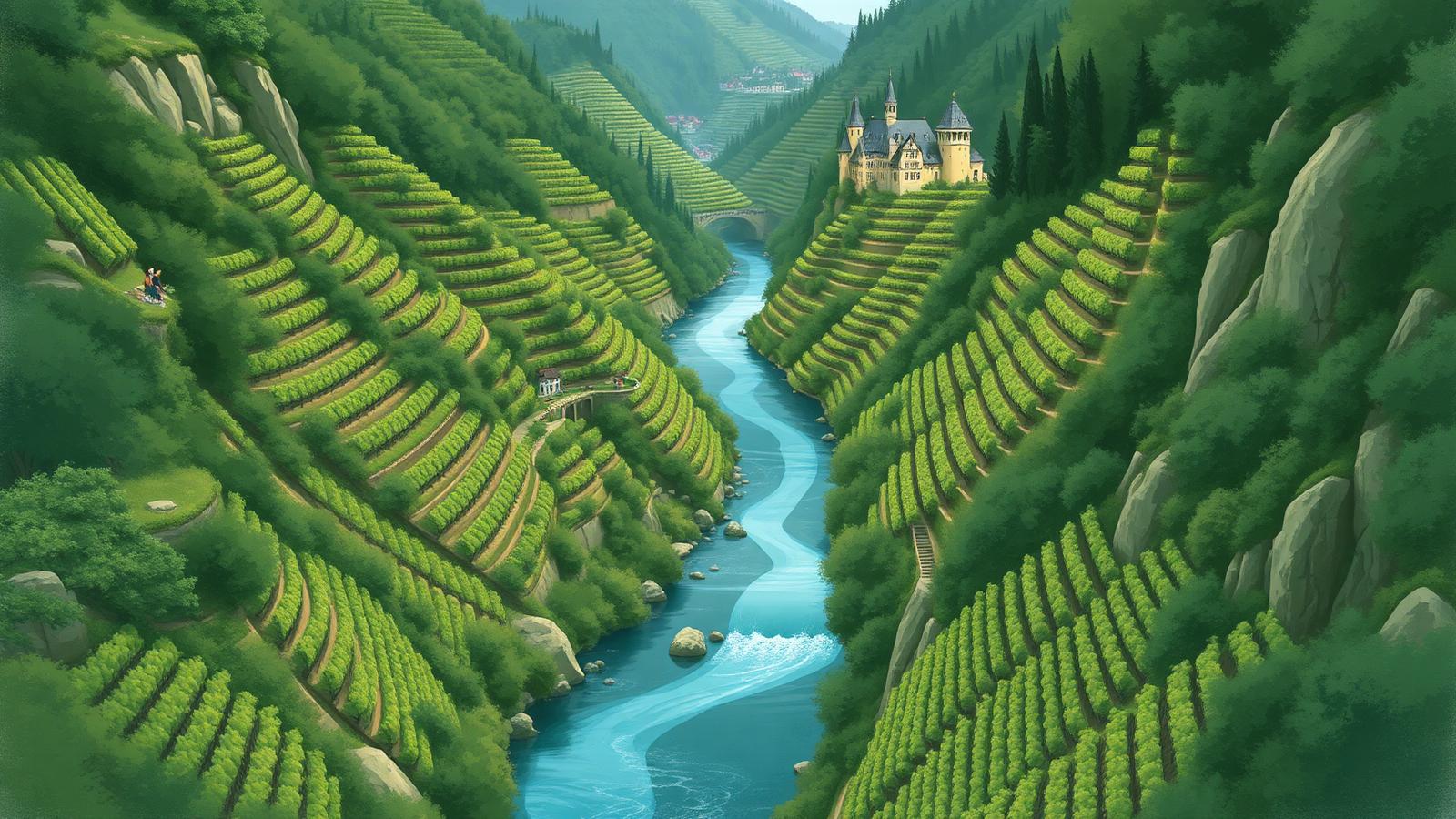
Illustrative AI-generated scene of a narrow winding river between very steep terraced vineyard slopes and a small village

River cruise system

Moselle River Cruises

The Moselle is a narrow, looping side valley off the Rhine, cruised between Koblenz, Trier and the Luxembourg border. It is small-scale cruising: steep vineyards, wine villages and one Roman city.

The short answer

The Moselle is usually an extension rather than a whole voyage. Vessels leave the Rhine at Koblenz, spend two or three days working up the valley, and rejoin the main corridor afterwards.

What distinguishes it is scale. The river is narrow and the valley sides rise steeply on both banks, so the landscape is close and continuous in a way the Rhine's wider reaches are not. The vineyard slopes here are among the steepest worked anywhere in Europe.

At a glance

Where it runs
Western Germany, Luxembourg and north-eastern France
Length
About 545 km in total, of which the German reach is cruised
Countries
Germany, Luxembourg, France
Cruised stretch
Koblenz upstream to Trier and Remich
Season
Roughly April to October
Main start and end points
Koblenz, Trier

The Moselle as a corridor

  1. River

    Moselle

    Western Germany, Luxembourg and north-eastern France

  2. Cruised stretch

    Koblenz upstream to Trier and Remich

  3. Stretches

    2 in downstream order

    Lower Moselle → Upper Moselle and the border reach

  4. Places along it

    5 cities and stops

    Listed in downstream order further down this page.

Why a river is not a region

One waterway, in a fixed order

A cruise region can be entered from several directions. A river corridor can only be travelled upstream or downstream along the same line.

It is also short. Trier is roughly 190 river kilometres from Koblenz, but the river meanders so heavily that the same distance across country is far less, and the valley never opens into anything like plain until above Trier.

The Moselle corridor

The river's own course, with the cities river cruises use. Select a stretch to focus on it.

KoblenzCochemBernkastel-KuesTrierRemich

Every city on the map

  • KoblenzGermany, start or end point.
  • CochemGermany, stop along the way.
  • Bernkastel-KuesGermany, stop along the way.
  • TrierGermany, stop, and a start or end point.
  • RemichLuxembourg, stop along the way.

The line is the river's own course, not the track of any voyage. Cities are the ones needed to understand the corridor, not a complete list of everywhere a vessel can tie up.

What cruising the Moselle actually means

A Rhine side valley, not a separate system
Almost all Moselle cruising is joined to a Rhine itinerary at Koblenz. Standalone Moselle-only voyages are the exception.
Narrow, locked and slow
The river is canalised with locks throughout the cruised reach and is much narrower than the Rhine, so vessels are smaller and progress is unhurried.
Continuous vineyard landscape
The valley sides are terraced almost without interruption, including slopes among the steepest cultivated anywhere in Europe.
Three countries in a short distance
Above Trier the river borders Luxembourg and continues into France, so a short voyage can touch three states.
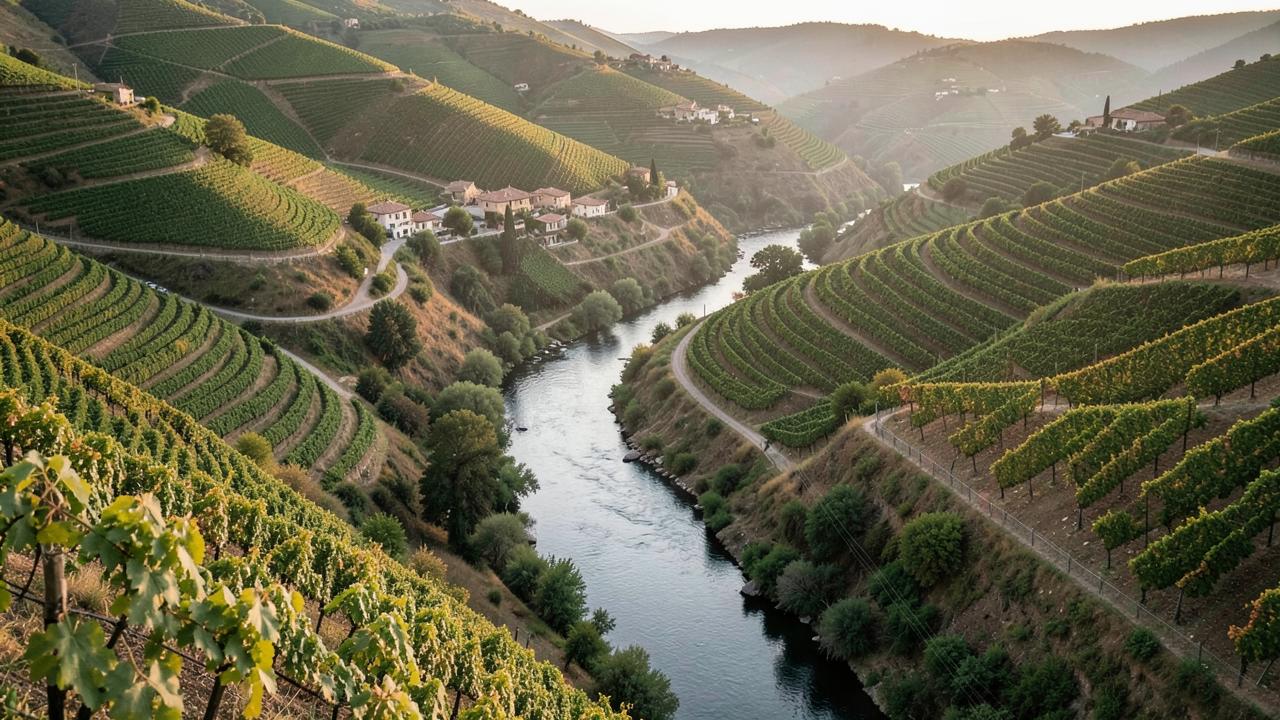
A narrow river looping tightly between steep vineyard hillsides with small villages on the bank
Tight meanders between vineyard slopes: the distance covered in a day is short, and the bank stays close on both sides.

Why the Moselle is sailed slowly, and by smaller vessels

The Moselle does not run straight. It meanders through a slate massif in a series of tight loops, so the distance a ship travels is far greater than the distance it advances, and the bends themselves limit how large and how fast a vessel can comfortably work the river.

Those loops are also the reason for the vineyards. The river's curves create south-facing slopes above the water, which is what makes steep-slope viticulture possible this far north. The landscape you look at from the deck and the wine the towns are known for are the same geographic fact seen twice.

For a passenger the practical effect is scale. Towns sit directly on the water at the foot of the slopes, moorings are in the middle of them, and a day's sailing covers a modest distance. The Moselle is usually combined with the Rhine rather than sailed alone, because on its own it is a short corridor.
The main stretches

A river has an order rather than fuzzy edges. These are the stretches the corridor divides into, in the direction the water flows.

Lower Moselle

Koblenz and the Rhine junction upstream to Cochem and BernkastelGermany

A tight, deeply incised valley of extremely steep vineyard slopes, castles and small wine villages. The river loops constantly, so the same hillside is often seen from several angles within an hour.

Navigation: Canalised with locks throughout, and much narrower than the Rhine. Vessel size is limited accordingly.

Upper Moselle and the border reach

Bernkastel through Trier to Remich and the Luxembourg borderGermany, Luxembourg, France

The valley opens out towards Trier, the oldest city in Germany and a Roman provincial capital. Above Trier the river forms the border with Luxembourg and continues into France, where cruise navigation effectively ends.

Navigation: An international waterway shared by three states, with freight traffic serving the Lorraine and Saar industrial areas.

Cities and stops along the river

The main places along the corridor, in downstream order within each stretch.

Cities and stops used by Moselle river cruises
PlaceCountryStretchRoleWhy it matters
KoblenzGermanyLower MoselleStart or end pointThe junction with the Rhine, and the point where Moselle voyages join or leave the Rhine corridor.
CochemGermanyLower MoselleStop along the wayA small wine town below a hillside castle, in the narrowest part of the valley.
Bernkastel-KuesGermanyLower MoselleStop along the wayA wine town in one of the steepest stretches of the Moselle valley.
TrierGermanyUpper Moselle and the border reachStop, and a start or end pointThe oldest city in Germany; its Roman monuments and cathedral are World Heritage listed.
RemichLuxembourgUpper Moselle and the border reachStop along the wayOn the Luxembourg bank, at the upstream limit of most Moselle voyages.

How voyages are structured

The shapes voyages take along this corridor: where they start, which way they run and how far they reach.

Rhine voyages with a Moselle leg

The most common structure: a Rhine itinerary that turns off at Koblenz for part of the Moselle before returning.

Koblenz to Trier and back

A dedicated out-and-back voyage on the Moselle itself, usually short.

Moselle with the Saar or the Rhine gorge

Combinations that pair the valley with the neighbouring Saar or with the Upper Middle Rhine.

When voyages operate

The valley has a mild climate for its latitude, which is why the vineyards are there. Voyages run from spring to late autumn.

September and October are the harvest months and the most active period in the valley's own calendar.

There is only a limited December pattern here compared with the Rhine and Main.

Cruise activity through the year — the Moselle
Essentially no cruisesShoulder periodPeak cruise activityLow season
Read this as a table
Relative cruise activity by month in the the Moselle cruise region
MonthCruise activity
JanEssentially no cruises
FebEssentially no cruises
MarEssentially no cruises
AprShoulder period
MayPeak cruise activity
JunPeak cruise activity
JulPeak cruise activity
AugPeak cruise activity
SepPeak cruise activity
OctPeak cruise activity
NovLow season
DecEssentially no cruises

An indicative pattern of when voyages operate, drawn from waterway and season information rather than any operator's schedule.

Practical conditions that shape a voyage

Conditions on this river that can change what actually happens on a voyage.

Small towns, limited moorings

Cochem, Bernkastel and Traben-Trarbach have short quays, so vessels commonly raft up side by side and passengers cross through a neighbouring ship.

High water closes the valley first

Because the river is narrow and the bridges low, Moselle navigation is suspended in high-water periods before the Rhine is affected.

The valley is the excursion

Most of what there is to see lies on the banks. Apart from Trier, there are few substantial inland destinations.

What to know about the Moselle

Key facts

  • About 545 km long, rising in France and joining the Rhine at Koblenz.
  • The cruised reach is roughly 190 km, Koblenz to Trier.
  • Canalised with locks along the whole navigable length.
  • Trier's Roman monuments, cathedral and Liebfrauenkirche are UNESCO World Heritage.
  • The valley contains some of the steepest cultivated vineyard slopes in Europe.
  • Above Trier the river forms the German–Luxembourg border.

What to check when comparing voyages

  • Whether the Moselle is a leg of a Rhine voyage or the whole itinerary.
  • How many days are actually spent in the valley.
  • That rafting at small-town moorings is normal here.
  • Whether Trier is included, since it is the only large historic city on the route.
  • What the operator states about high water and suspended navigation.
  • Danube river cruises

    A west-to-east corridor from Germany to the Black Sea, cruised mainly between Passau, Vienna, Budapest and the Danube Delta.

  • Rhine river cruises

    A south-to-north corridor from Basel to the Dutch delta, built around the Upper Middle Rhine Valley gorge.

  • Seine river cruises

    A short French corridor from Paris downstream through Normandy to Rouen and the Seine estuary.

  • Rhône & Saône river cruises

    A north–south French corridor from Burgundy through Lyon to Provence and the Camargue.

  • Douro river cruises

    A short Portuguese valley from Porto upstream through the terraced Alto Douro wine country to the Spanish border.

  • Main and the Main–Danube Canal river cruises

    The German connecting corridor from the Rhine at Mainz through Franconia and the Main–Danube Canal to Kelheim.

  • Elbe river cruises

    A Czech–German corridor from Prague and the sandstone gorge through Dresden and Magdeburg to Hamburg.

  • Nile river cruises

    A short Egyptian reach between Luxor and Aswan linking the temple sites, plus a separate Lake Nasser circuit.

  • Mekong river cruises

    A Vietnam–Cambodia corridor from the Mekong delta through Phnom Penh towards the Tonlé Sap and Angkor.

  • Mississippi river cruises

    The long North American corridor from New Orleans upstream to St. Paul, with Ohio and Cumberland connections.

  • Columbia & Snake river cruises

    A Pacific Northwest corridor from Astoria and Portland through the Columbia Gorge and up the Snake to Idaho.

  • How river cruising differs from ocean cruising

    The structural differences: locks, water level, city-centre mooring and no sea days.

Sources & verification

Facts on this page are taken from the sources below. Cruise lines are used only as sources for facts about their own operations, never as sources of independent assessment.