North Sea and Danish gateways
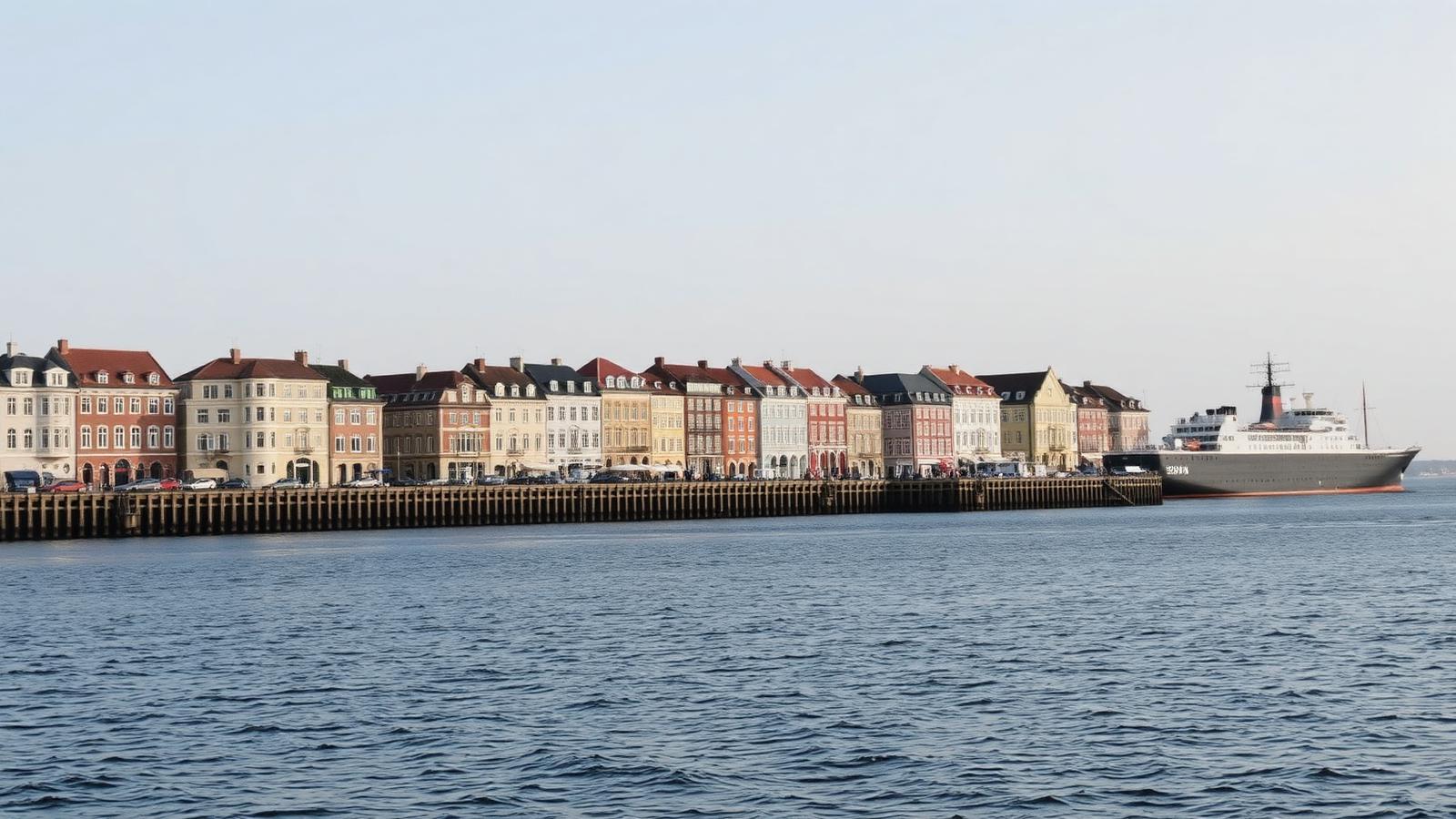
The western entrance to the region: Amsterdam on the North Sea, Kiel and Warnemünde on the German coast, and Copenhagen at the Danish straits. Most Baltic itineraries begin or end at one of these.
Ocean cruise region
The Baltic is a city region. Ports are close together and almost every call is a national capital or a major historic city, so itineraries are built around urban days ashore rather than beaches or scenery.
The Baltic is an almost enclosed sea, entered from the North Sea through the Danish straits or through the Kiel Canal. That geography keeps the water calm compared with the open Atlantic and keeps sailing distances between ports short.
A typical itinerary sets out from Copenhagen, Kiel, Warnemünde or Amsterdam and works clockwise or anticlockwise around the sea: Stockholm, Helsinki and Tallinn in the north, and on longer sailings Gdynia, Klaipėda and Riga in the south and east.
Region
Baltic and Northern Europe
The Baltic Sea and its western approaches, between Denmark, Germany, Poland, the Baltic states, Finland and Sweden.
Subregion
North Sea and Danish gateways, Sweden and the Gulf of Finland, Southern and eastern Baltic.
Departure port
Copenhagen, Kiel, Warnemünde (Rostock), Amsterdam, Stockholm.
Ports of call
10 ports covered here
Grouped by subregion further down this page.
Because each port is a different country, the region packs an unusual number of national capitals into one week — but it also means the ports themselves are the sights, and the ship is usually berthed within reach of a city centre rather than a resort coast.
The Baltic connects to the rest of the ocean only through the narrow Danish straits and, for smaller ships, the Kiel Canal. Everything downstream of that follows from it. The sea is shallow and largely sheltered, so crossings are rarely governed by open-ocean swell; it is brackish rather than fully saline, because more river water enters than the straits can flush out; and tidal range is small enough that berthing windows are set by traffic and pilotage rather than by the tide.
The same enclosure compresses distance. From Copenhagen, the far end of the region at Helsinki or Tallinn is an overnight run, not a multi-day passage. That is why a Baltic week can contain six or seven port days while an equivalent week in Asia or the Caribbean cannot: the ship spends the night moving between cities instead of spending days crossing open water.
Switch between cruise areas, ports, departure gateways and cruise-line presence. Areas are geographic zones rather than routes: a ship crosses them in whatever order its itinerary sets, and the same area can be reached from more than one gateway.
The main geographic divisions of the region.
The characteristics below are the ones that materially shape how a cruise here is built and what a day ashore looks like.
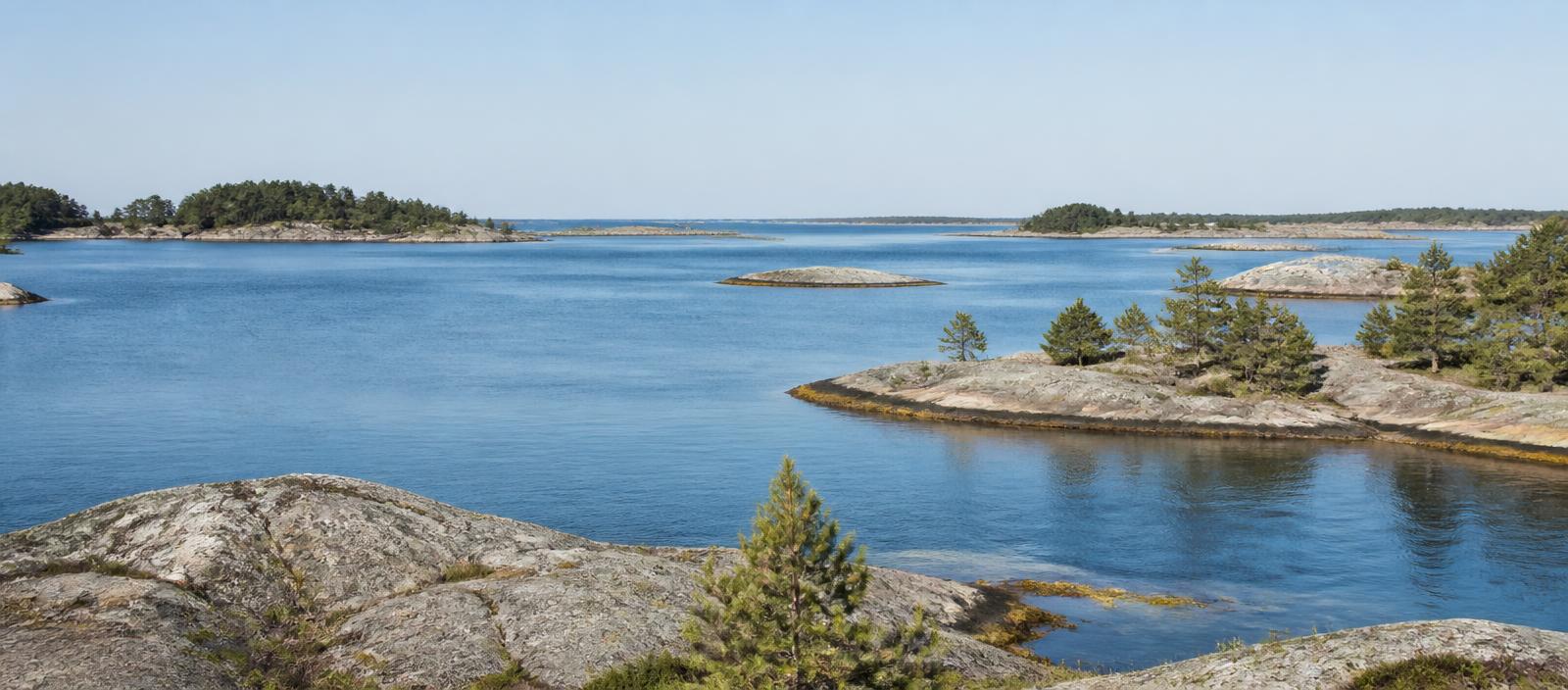
The parts of the region differ in sailing distance, gateway access and the kind of port day they produce — which is what decides where an itinerary can realistically go.
The western entrance to the region: Amsterdam on the North Sea, Kiel and Warnemünde on the German coast, and Copenhagen at the Danish straits. Most Baltic itineraries begin or end at one of these.
The northern Baltic, taking in Stockholm and its archipelago approach, Helsinki and Tallinn. The three cities are close enough that a ship can call at each on consecutive days.
The southern and eastern shore, from Gdańsk and Gdynia in Poland to Klaipėda in Lithuania and Riga in Latvia. Ports here serve historic city centres that are usually a short drive from the quay.
| Subregion | Representative ports | How its cruise pattern differs |
|---|---|---|
| North Sea and Danish gateways | Copenhagen, Kiel, Warnemünde (Rostock), Amsterdam | Turnaround-heavy rather than sightseeing-heavy: these are the fly-in cities and the point where a cruise enters or leaves the Baltic. |
| Sweden and the Gulf of Finland | Stockholm, Helsinki, Tallinn | The densest capital-city sequence in the region, with short overnight hops and, at Stockholm, several hours of archipelago navigation before the berth. |
| Southern and eastern Baltic | Gdańsk (Gdynia), Klaipėda, Riga | Called on longer Baltic itineraries rather than short ones, and generally combined with the Gulf of Finland rather than visited on its own. |
Itineraries here fall into a small number of recurring shapes, set by where the gateways are and how far apart the ports lie.
3 patterns across 3 subregions
A pattern is a shape of route, not a sailing. Which one an itinerary follows decides how much of the region it covers.
From Copenhagen, Kiel or Warnemünde, calling anticlockwise or clockwise at the northern capitals and returning to the same port. The most common shape in the region.
A longer sailing that adds Gdynia, Klaipėda or Riga to the northern capitals, usually eleven nights or more.
Starting in Amsterdam or a UK port and entering the Baltic through the Danish straits or the Kiel Canal, with a sea day at each end.
Because the Baltic has effectively one entrance, most itineraries are loops: the ship enters through the straits, works up one side of the sea and back down the other, and leaves the way it came. A one-way itinerary would require passengers to fly home from a smaller airport at the far end, so operators reserve that shape for repositioning voyages at the start and end of the season.
The order of calls within the loop is mostly a scheduling problem rather than a geographic one. Berth capacity in Stockholm, Helsinki and Tallinn is finite, and several ships work the same short circuit in the same week, so two sailings covering identical ports can visit them in a different sequence and on different weekdays — which matters, because museum and palace closing days are the usual reason a well-known sight is unavailable on a given call.
The ports where cruises in this region commonly begin.
| Port | Country | Subregion | Why it matters |
|---|---|---|---|
| Copenhagen | Denmark | North Sea and Danish gateways | The principal Baltic turnaround port, handled by Copenhagen Malmö Port, with several cruise quays at different distances from the city centre. |
| Kiel | Germany | North Sea and Danish gateways | A German turnaround port at the Baltic end of the Kiel Canal, widely used for fly-cruise and drive-to Baltic sailings. |
| Warnemünde (Rostock) | Germany | North Sea and Danish gateways | Rostock's cruise terminal on the Baltic coast, and a turnaround port as well as a call. |
| Amsterdam | Netherlands | North Sea and Danish gateways | A North Sea turnaround port reached through the North Sea Canal and sea lock, used as the western starting point for many northern European itineraries. |
| Stockholm | Sweden | Sweden and the Gulf of Finland | A turnaround port and call, approached through several hours of archipelago navigation before the ship reaches the city quays. |
Several Baltic ports are not on the open coast. Stockholm sits behind an archipelago of thousands of islands, Amsterdam behind the North Sea Canal and the lock at IJmuiden, and Riga several kilometres up the Daugava. The final approach is slow, pilot-assisted and sometimes measured in hours, which is why arrival times in these ports look late relative to the short distance sailed overnight.
It also affects what the day ashore is worth. Where the approach is long, part of the scenery is the approach itself, and the useful time in the city is shorter than the published port hours suggest.
Grouped by subregion, with what each port gives access to and how close the ship berths to it.
Denmark
Departure port and port of call
The principal Baltic turnaround port, handled by Copenhagen Malmö Port, with several cruise quays at different distances from the city centre.
Germany
Departure port and port of call
A German turnaround port at the Baltic end of the Kiel Canal, widely used for fly-cruise and drive-to Baltic sailings.
Germany
Departure port and port of call
Gateway for Rostock and Berlin.
Rostock's cruise terminal on the Baltic coast, and a turnaround port as well as a call.
Netherlands
Departure port and port of call
A North Sea turnaround port reached through the North Sea Canal and sea lock, used as the western starting point for many northern European itineraries.
Sweden
Departure port and port of call
A turnaround port and call, approached through several hours of archipelago navigation before the ship reaches the city quays.
Finland
Port of call
The Finnish capital on the Gulf of Finland, with cruise quays both close to and some distance from the centre.
Estonia
Port of call
An Estonian port whose cruise quays sit within walking distance of the walled old town.
Latvia
Port of call
A river-city port on the Daugava, reached from the Gulf of Riga, with berths near the historic centre.
Poland
Port of call
Gateway for Gdańsk.
The Polish cruise call used to reach Gdańsk and the Tri-City area on the southern Baltic shore.
Lithuania
Port of call
Lithuania's only seaport, at the entrance to the Curonian Lagoon.
Listed alphabetically. Presence is taken from each line's own published destination information.
A factual description of the segments present in this region. What ship size changes in general — port access, facilities, motion and density — is explained once on ships explained.
The largest share of capacity, running weekly or ten-day rotations from Copenhagen, Kiel, Warnemünde and Amsterdam.
Mid-size ships on longer itineraries that add the southern and eastern Baltic ports, and sometimes combine the Baltic with Norway.
Ships sailing from UK ports across the North Sea, which spend more of the itinerary at sea before reaching the Baltic.
Deployment concentrates between May and September, when daylight in the northern Baltic is very long and shore programmes in the capitals run at full capacity.
Shoulder sailings appear in late April and early October, generally with fewer ships and shorter port days as daylight shortens.
There is effectively no mainstream ocean cruise season here in winter; ships redeploy to warmer regions.
| Month | Cruise activity |
|---|---|
| Jan | Essentially no cruises |
| Feb | Essentially no cruises |
| Mar | Essentially no cruises |
| Apr | Shoulder period |
| May | Peak cruise activity |
| Jun | Peak cruise activity |
| Jul | Peak cruise activity |
| Aug | Peak cruise activity |
| Sep | Shoulder period |
| Oct | Low season |
| Nov | Essentially no cruises |
| Dec | Essentially no cruises |
Indicative pattern for the region as a whole, based on published operator deployment. Individual gateway ports may show a slightly longer shoulder than the northern Baltic ports.
The limit here is not storms but light and demand. At Baltic latitudes, midsummer daylight runs to eighteen hours or more, which lets a ship arrive early and stay late and makes a full city day possible; by late October the same call would begin and end in darkness. Winter also brings sea ice to the northern Gulfs of Bothnia and Finland, which is handled by icebreaker-assisted commercial traffic rather than by cruise deployment. Ships are mobile assets, so instead of operating a diminished northern product they redeploy to the Caribbean and the Canaries — which is why the Baltic calendar closes rather than merely quietening.
A cool-temperate summer with mild days, long daylight and changeable, showery conditions.
This describes the conditions that broadly define cruising here. It is not a forecast, and it says nothing about any individual future sailing.
Copenhagen, Stockholm, Helsinki, Tallinn and Riga are all national capitals within short sailing distance of each other. No other region in this atlas concentrates capital cities this tightly.
Stockholm's archipelago, the Kiel Canal and the Amsterdam sea lock are scheduled navigation set pieces, not just transits.
The Baltic effectively stops as a cruise region for half the year. Unlike the Mediterranean or the Caribbean, there is no meaningful winter alternative here.
High-level context for understanding the region. Passport, visa, health and security requirements depend on your own nationality and change over time, so check the official source for your country.
The facts that materially affect what this cruise region is like.
What differs between two itineraries that look similar at first glance, once you start reading individual sailings.
Facts on this page are taken from the sources below. Cruise lines are used only as sources for facts about their own operations, never as sources of independent assessment.