Port-intensive, few sea days
Overnight distances between major ports are short, so most of the days on a week-long itinerary are port days. Sea days appear mainly on longer routes or when a ship repositions between areas.
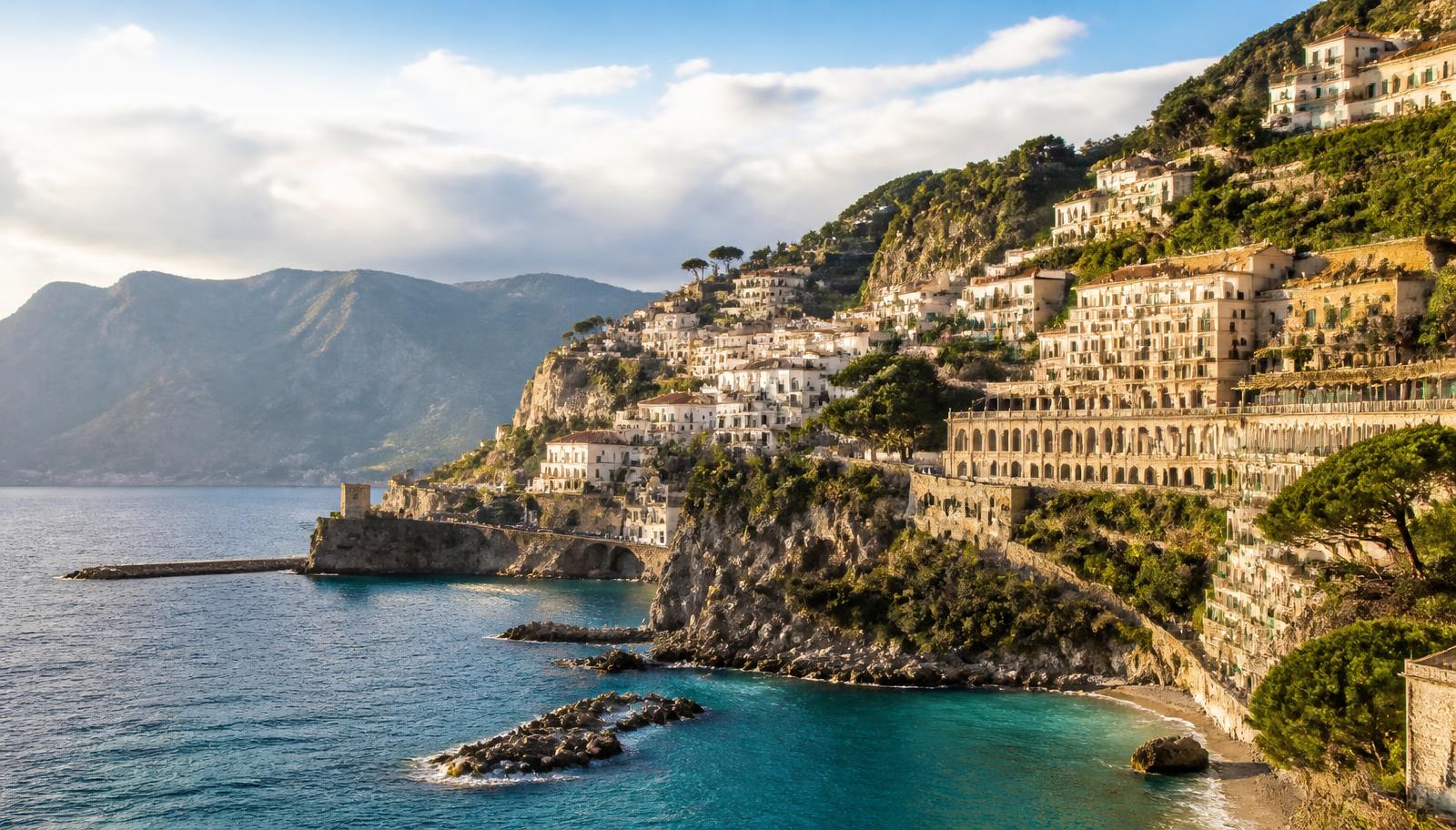
Ocean cruise region
The Mediterranean is a port-intensive cruise region: distances between ports are short, which allows itineraries with frequent port calls and limited sea time.
Cruises in the Mediterranean are normally sold as three broad areas — the western Mediterranean, the Adriatic, and the Greek islands and Aegean. Which area a cruise covers decides which countries you see and which airport you fly into.
Most itineraries start from a turnaround port that is also a large city or close to one: Barcelona, Civitavecchia for Rome, Genoa or Savona, Marseille, Venice or Trieste in the north Adriatic, and Piraeus for Athens in the Aegean. Ships then work along a coast or between islands, so the geography of the area determines the shape of the route.
At a glance
The structural facts first, in the order they matter when you are working out what a Mediterranean cruise actually is.
Because ports are close together, Mediterranean itineraries can be densely scheduled. Port days can be full days ashore, shorter itineraries may contain little sea time, and several ports serve inland cities that are an hour or more from the quay.
Map
Switch between cruise areas, ports, departure gateways and cruise-line presence. Areas are geographic zones, not itineraries. Everything on the map is also listed in text on this page.
The main geographic divisions of the region.
Geographic structure
Region, cruise area, gateway and ports of call are four different levels. Reading an itinerary is mostly a matter of seeing which level each name belongs to.
Level 1 · Region
Mediterranean
One enclosed sea, several countries.
Level 2 · Cruise area
Western Mediterranean, Adriatic, Greek Islands and Aegean.
Decides which countries you see.
Level 3 · Gateway
Turnaround port
Where the cruise starts and which airport you use.
Level 4 · Ports of call
Coast or island chain
Short hops, often to an inland city.
Overnight distances between major ports are short, so most of the days on a week-long itinerary are port days. Sea days appear mainly on longer routes or when a ship repositions between areas.
Civitavecchia is the cruise port for Rome, Livorno for Florence and Pisa, and Piraeus for Athens. Transfer time differs by port — Piraeus sits close to central Athens, while Civitavecchia and Livorno are well outside the cities they are sold as — so check the distance for each call rather than assuming a single rule.
A single itinerary can call in several countries. Most western and Adriatic ports lie inside the Schengen area, while calls in Turkey, Montenegro or North Africa sit outside it.
Some Aegean island ports, Santorini most prominently, are anchorage calls where passengers reach shore by tender rather than by walking off at a berth.
The Mediterranean is an enclosed sea with a long, indented coastline and thousands of islands. Almost anywhere a ship might want to go is within an overnight run of somewhere else it might want to go, so a route can be built as a chain of short hops rather than as a crossing with stops at each end.
That single geographic fact drives most of what a Mediterranean cruise feels like. Ships sail overnight and berth in the morning, so the days are spent ashore rather than at sea. Because the hops are short, a week can contain five or six different ports in several countries, which is why the region rewards people who want variety and tires people who want to sit still.
It also explains the exceptions. Sea days appear where the geography opens up: crossing between the western and eastern basins, running out to the Balearics or the Canaries at the edge of the season, or repositioning between areas at the start and end of the year. When you see a sea day in a Mediterranean itinerary, it is usually the map telling you the route has changed basin, not the line giving you a rest day.
| Sailing distances | Typical shape | Access to the sights | |
|---|---|---|---|
| Western Mediterranean | Short hops along a continuous mainland coast, plus the large western islands. | Round-trip loops from a small number of very large turnaround ports. | Several ports are the sea access to an inland city, so a coach transfer is part of the day. |
| Adriatic | Very short runs inside a narrow, sheltered sea with a dense island chain. | Loops and one-way legs, often combined with the Aegean or the Ionian coast. | Historic centres frequently sit at the quay, so port days start on foot. |
| Aegean and eastern Mediterranean | Island-to-island distances are short, but reaching the eastern edge adds sailing time. | Loops from Greek or Turkish gateways; longer routes add a crossing. | A mix of walkable island towns and mainland ports serving inland archaeological sites. |
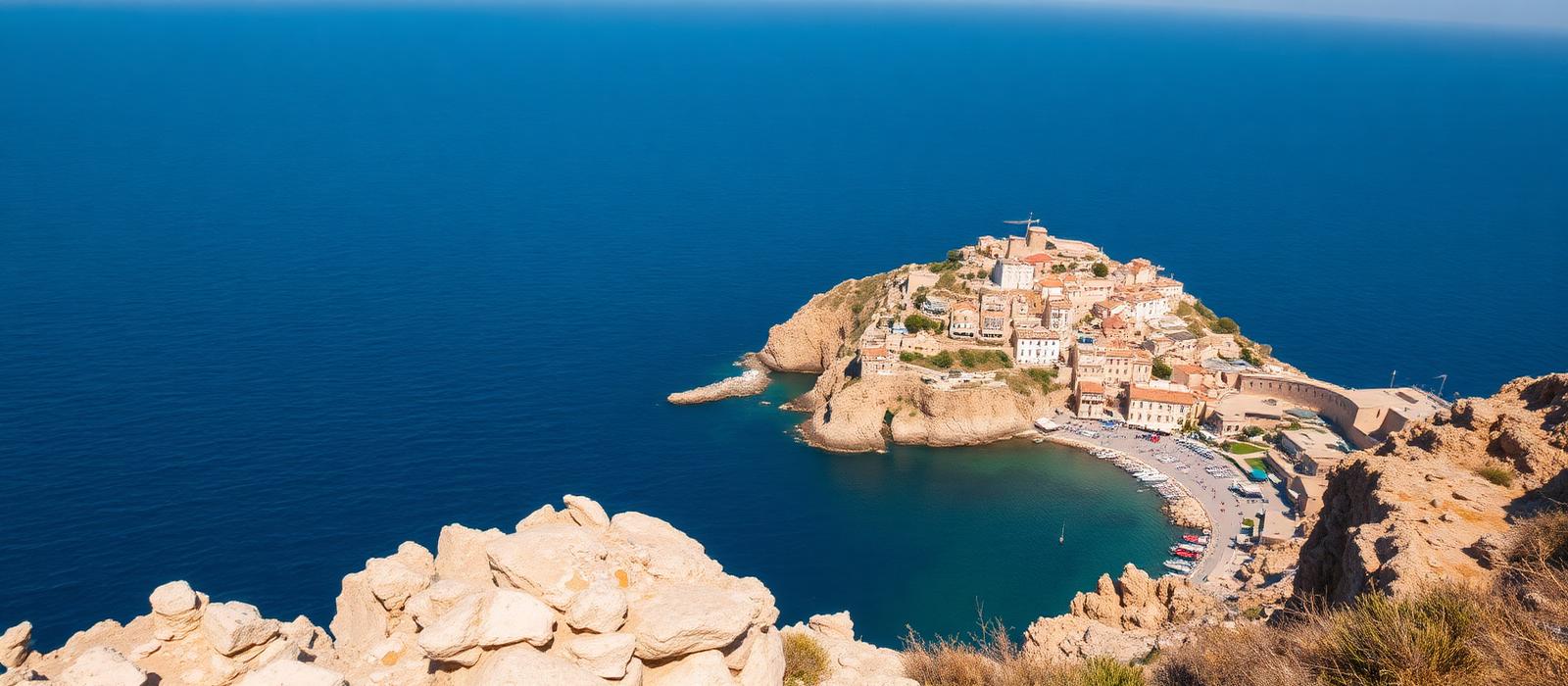
Cruise areas
Not ranked, and none is presented as better than another. They differ in the countries covered, the airports used and the rhythm of the route.
The waters between Spain, southern France, Italy and the western islands. Itineraries here commonly combine Spanish, French and Italian ports, and often call at the Balearic Islands or Malta.
Representative ports: Barcelona, Palma, Marseille, Genoa, Savona, Civitavecchia, Naples, Valletta
Longest season of the three Mediterranean areas, with the largest turnaround ports and the most winter sailings.
The sea between the Italian east coast and the Balkan coast, reaching from Venice and Trieste in the north to the Croatian coast and the entrance to the Ionian Sea.
Representative ports: Venice, Trieste, Dubrovnik
Shorter coastal hops along one sea, with a concentrated warm-season deployment and fewer year-round options.
The Aegean basin between mainland Greece and the Turkish coast, including the Cyclades and Dodecanese island groups. Piraeus is the main turnaround port for this area.
Representative ports: Piraeus, Mykonos, Santorini, Rhodes
The most island-dense area, with short calls and several anchorage ports served by tender.
Gateways
Turnaround ports decide which airport you fly into and whether the cruise is round-trip or one-way.
Spain · Western Mediterranean
One of the main turnaround ports of the western Mediterranean, with dedicated cruise terminals operated under the Port de Barcelona authority.
Italy · Western Mediterranean
Gateway for Rome.
The sea gateway for Rome, roughly 70 km north-west of the city.
France · Western Mediterranean
France's largest commercial port and a French home port for western Mediterranean itineraries.
Italy · Western Mediterranean
A Ligurian port used as an Italian home port for western Mediterranean itineraries.
Italy · Western Mediterranean
A Ligurian port west of Genoa, also used as an Italian home port.
Spain · Western Mediterranean
The main port of Mallorca and the principal cruise port of the Balearic Islands.
Spain · Western Mediterranean
A Spanish port on the Gulf of Valencia, used both as a home port and as a call.
Italy · Western Mediterranean
The port of Naples lies close to the city centre and serves the wider Bay of Naples area.
Malta · Western Mediterranean
Ships berth in Malta's Grand Harbour, beside the capital.
Italy · Adriatic
Cruise access to Venice is regulated, and larger ships are handled outside the historic lagoon channels.
Italy · Adriatic
A northern Adriatic port in north-east Italy, close to the Slovenian border.
Greece · Greek Islands and Aegean
Gateway for Athens.
The main Greek turnaround port and the sea gateway for Athens.
Türkiye · Greek Islands and Aegean
A city on the Bosphorus strait, used both as a turnaround port and as a call.
Ports of call
Grouped by cruise area. Enough to understand the region, not a complete directory and not destination guides.
Spain
Departure and call
One of the main turnaround ports of the western Mediterranean, with dedicated cruise terminals operated under the Port de Barcelona authority.
Italy
Departure and call
Gateway for Rome.
The sea gateway for Rome, roughly 70 km north-west of the city.
France
Departure and call
France's largest commercial port and a French home port for western Mediterranean itineraries.
Italy
Departure and call
A Ligurian port used as an Italian home port for western Mediterranean itineraries.
Italy
Departure and call
A Ligurian port west of Genoa, also used as an Italian home port.
Spain
Departure and call
The main port of Mallorca and the principal cruise port of the Balearic Islands.
Spain
Departure and call
A Spanish port on the Gulf of Valencia, used both as a home port and as a call.
Italy
Departure and call
The port of Naples lies close to the city centre and serves the wider Bay of Naples area.
Italy
Port of call
Gateway for Florence and Pisa.
A Tuscan port used as the sea access point for Florence and Pisa.
Malta
Departure and call
Ships berth in Malta's Grand Harbour, beside the capital.
Italy
Departure and call
Cruise access to Venice is regulated, and larger ships are handled outside the historic lagoon channels.
Italy
Departure and call
A northern Adriatic port in north-east Italy, close to the Slovenian border.
Croatia
Port of call
A walled-city port on the southern Croatian coast and a common Adriatic call.
Greece
Departure and call
Gateway for Athens.
The main Greek turnaround port and the sea gateway for Athens.
Greece
Port of call
A Cyclades island call; larger ships are handled at the newer port north of the old town.
Greece
Port of call
Ships anchor offshore in the caldera; passengers come ashore by tender.
Greece
Port of call
A Dodecanese port beside the medieval old town, close to the Turkish coast.
Türkiye
Port of call
Gateway for Ephesus.
A Turkish Aegean port used as the sea access point for the Ephesus area.
Türkiye
Departure and call
A city on the Bosphorus strait, used both as a turnaround port and as a call.
Season
Longest in the western Mediterranean, shorter in the east.
The western Mediterranean carries cruise traffic across most of the year, and some operators, including MSC Cruises, publish year-round western Mediterranean programmes.
The Aegean and Adriatic have a more concentrated season, with the widest choice of sailings in the warmer months and much less deployment in winter.
Season length differs by operator and by ship. Check the actual sailing dates published for the specific itinerary rather than assuming a fixed regional season.
| Month | Cruise activity |
|---|---|
| Jan | Low season |
| Feb | Low season |
| Mar | Shoulder period |
| Apr | Shoulder period |
| May | Peak cruise activity |
| Jun | Peak cruise activity |
| Jul | Peak cruise activity |
| Aug | Peak cruise activity |
| Sep | Peak cruise activity |
| Oct | Shoulder period |
| Nov | Low season |
| Dec | Low season |
Indicative pattern for the region as a whole, based on published operator deployment. The western Mediterranean stays more active in winter than the Aegean and Adriatic, which thin out sharply.
A summer-dry climate: warm to hot and largely rainless from June to September, milder and wetter in the shoulder months and winter.
The Mediterranean does not close in winter the way a polar region does, but it changes character completely. High summer brings settled weather and the widest choice of sailings, and with it the heaviest concentration of ships, the hottest inland sites and the busiest port cities. Spring and autumn keep most of the same routes but with lower temperatures ashore and a higher chance of a wet day.
Wind, not temperature, is what actually disrupts a Mediterranean cruise. Regional winds can make a berth or a tender operation unworkable for a day, and a missed port is substituted or dropped rather than rescheduled. This is why an itinerary is best read as a plan of intent: the sequence is fixed, the individual call is not.
Late autumn and winter shrink the region rather than close it. Ships reposition out of the sea, the remaining programmes concentrate in the west and around the Canaries, and the sailings that stay tend to be longer, with more sea time and fewer island calls.
Itinerary patterns
Representative shapes of route, not products. Nothing here is a bookable route or a current schedule.
The ship returns to the port it left from — common from Barcelona, Civitavecchia, Genoa, Savona and Piraeus. Simplest to book flights for, since you fly in and out of the same city.
The ship starts in one city and finishes in another, for example between a western Mediterranean port and an Adriatic or Aegean port. Requires an open-jaw flight booking.
Short overnight distances between Aegean or Balearic islands allow a new port most days, sometimes with a short call of only part of a day.
What ship size changes in general is explained once on ships explained.
Big ships working fixed weekly rotations from the major turnaround ports, sold heavily to both European and North American markets.
Smaller ships that reach a wider set of ports and often run longer, less repetitive itineraries within the same areas.
Smaller ships operating seasonally, generally on shorter or more port-concentrated routes.
Cruise-line presence
Listed alphabetically, taken from each line's own published destination information. No ranking, scoring or recommendation.
What varies within the region
The structural differences inside the region, and the facts that materially affect what a cruise here is like.
The western Mediterranean, the Adriatic and the Aegean use different airports, visit different countries and have different port rhythms. A single week-long itinerary normally stays within one of them.
Because so many ports serve inland cities, the practical length of a port day is the published call time minus two or more hours of road or rail transfer.
Ports lie close together, so itineraries here tend to have more calls and fewer sea days than regions where ports are further apart.
What to look at once you start reading individual itineraries elsewhere. We do not sell cruises and do not know what is available.
High-level context only. For passport, visa, health and security requirements, use the official source for your own nationality.
Where to go next
The Mediterranean sits inside a larger system of ocean, river and expedition cruising.
Facts on this page are taken from the sources below. Cruise lines are used only as sources for facts about their own operations, never as sources of independent assessment.