Before you book
Life onboard: the basics
The daily pattern is broadly similar across the industry; the details belong to the operator.
The short answer
A cruise day is structured around one question: is the ship in port, or at sea? That decides where people are, how full the onboard programme is and how the venues are used.
Everything else — meals, drinks, entertainment, connectivity, dress and service charges — is a set of arrangements that differ by line, ship and fare type.
The rhythm
Two kinds of day, one programme
Whether the ship is alongside or under way changes the whole shape of the day.
In port
A port day
- The ship is alongside or at anchor for part of the day.
- Most activity moves ashore between the published arrival and all-aboard times.
- Casual venues cover a longer span of the day, which matters when you are ashore at a mealtime.
Under way
A sea day
- The ship is under way and everybody is on board at once.
- The onboard programme is fuller, and public spaces are at their busiest.
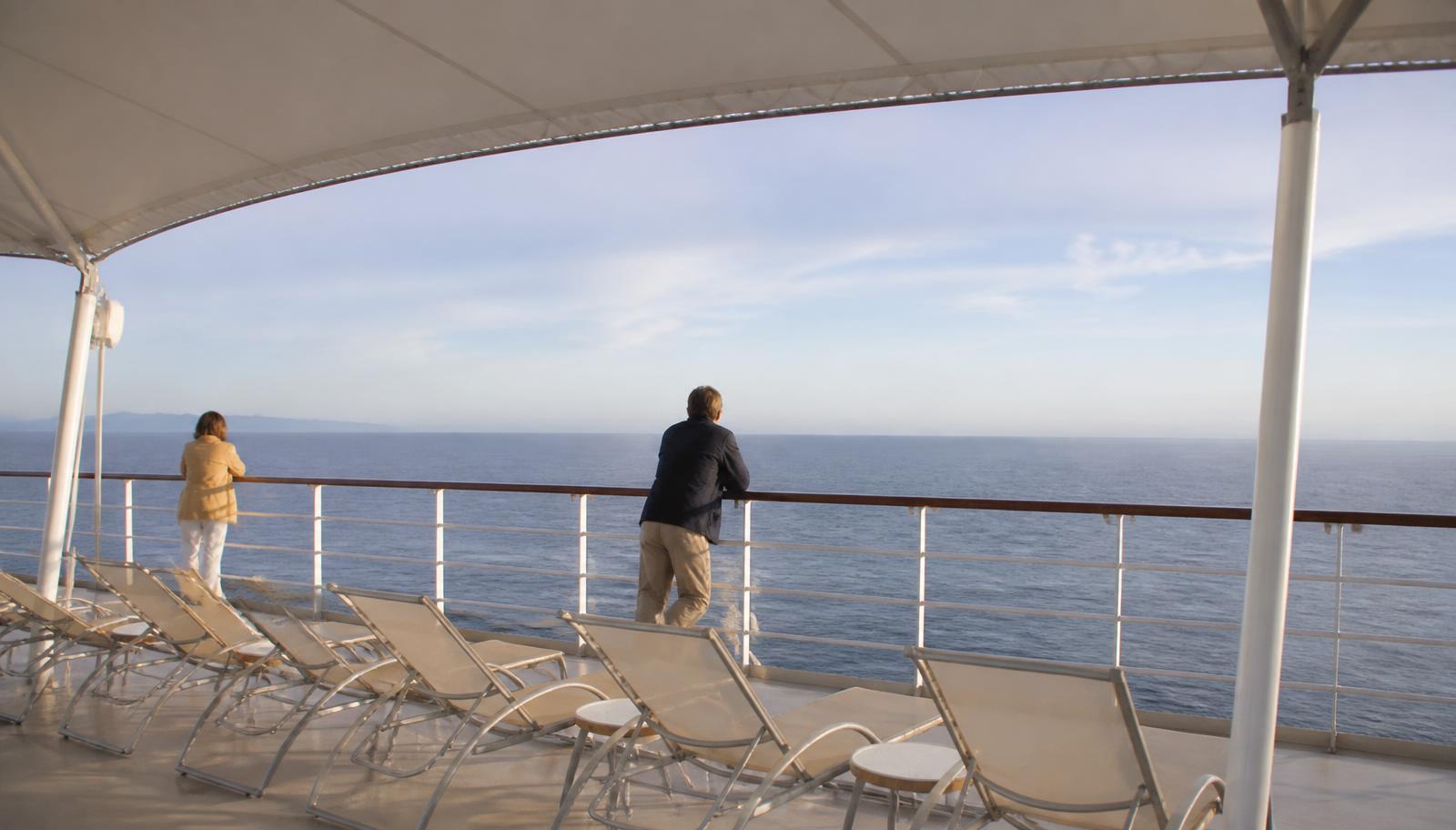
- In warm weather a sea day concentrates everyone outdoors at the same time.
The daily programme
Ships publish a programme — printed, on a screen, or in an app — listing venue opening hours, activities, the following day's port timings and any time-zone change. That, not a general expectation, is the schedule.
This is also why the choice of ship matters unevenly. On a route with a call almost every day, the vessel is mainly a place to sleep and eat between destinations. On a route with long legs at sea — a crossing, a wide-open region, a repositioning voyage — the ship is the destination for whole days at a time, and the range of dining, public space and programme carries much more weight. The same ship can therefore suit one itinerary far better than another.
Eating and drinking
Where the included line falls
Dining is largely included and largely predictable. Drinks are the single most variable item on board.
- Main dining
- Normally included in the fare. Lines run it either on fixed seatings at set times, or as open dining where you turn up within a window, or as a choice between the two.
- Buffet and casual venues
- Also normally included, and open across a longer span of the day than the main dining room.
- Speciality restaurants
- Usually carry a cover charge or à la carte pricing, and are optional.
- Room service
- May be included, partly included, or charged per delivery.
- Dietary requirements
- Generally handled if notified in advance; the practical limits depend on the ship, the galley and the length of the voyage.
Drinks vary more than anything else on board. Some lines include only water, basic tea and coffee at meals; others include soft drinks; premium and luxury fares often include wine, beer and spirits. Most mainstream lines sell drinks packages as an optional extra. Because the baseline differs, “drinks included” never means the same thing across two brochures — check the specific fare. The cost structure is set out on what a cruise fare includes.
Activities and spaces
Scheduled programme, shared rooms
Most of what is included is scheduled; most of what is charged is individual.
Normally in the fare
Entertainment and activities
- Theatre shows, live music, talks, quizzes, deck activities and enrichment sessions.
- Large ships run several venues in parallel and repeat headline shows so a full ship can see them.
- Small ships typically offer a single lounge, lectures and conversation instead of production shows.
Shared, and sometimes restricted
Pools, decks and public spaces
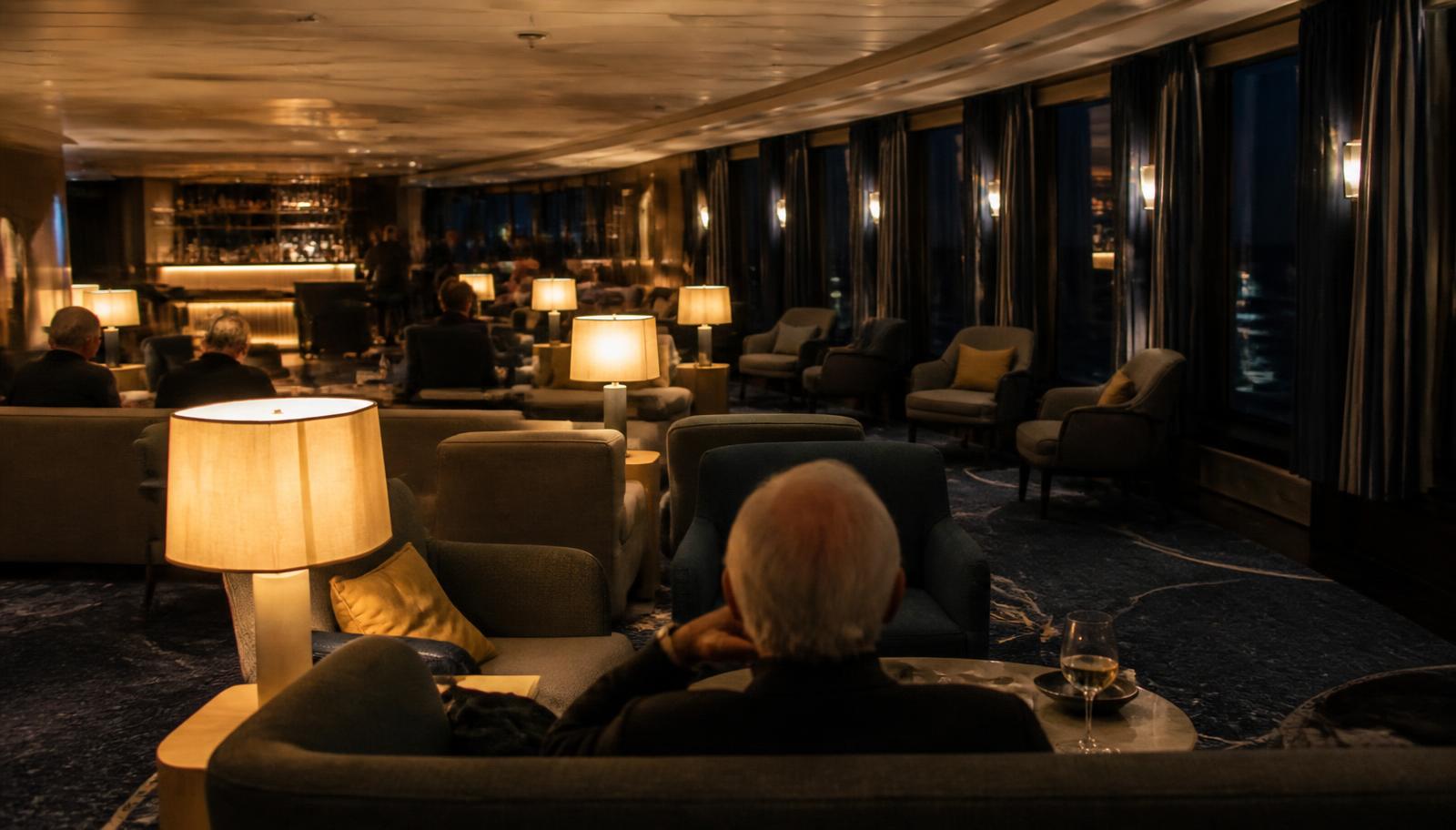
- Pools, hot tubs, promenade or open decks, lounges and libraries are included in the fare.
- How crowded they feel depends more on passenger density and itinerary type than on the size of the ship alone.
- Some areas are reserved for adults, and some for suite or loyalty-tier guests. Pools are often closed in port or in rough weather.
- Casinos, spa treatments, some fitness classes and certain thrill features are normally charged separately.
What different ship sizes can offer, and how that changes the feel on board, is covered on ships explained.
Two things people misjudge
Connectivity and dress
- Internet at sea
- Comes over satellite and is almost always sold separately, by the day or for the voyage, sometimes per device. Coverage and speed vary with the technology fitted to the ship and with location; high latitudes and remote expedition areas are the weakest.
- Mobile phones
- May pick up a ship's own maritime network once away from shore, which is charged at maritime roaming rates rather than normal roaming rates — a common source of unexpected bills. Ashore, local networks and land roaming rules apply as usual.
- Dress
- Daytime dress is casual almost everywhere. Evenings differ: some lines have no code beyond covered swimwear, some designate smart-casual evenings, and some schedule formal or “gala” nights, usually more often on longer voyages. Where a code exists it typically applies to the main dining room and theatre, not the buffet. There is no industry standard; the line publishes its own.
How you pay for any of it
Service charges and the onboard account
Ships are effectively cashless, and that is exactly why onboard spending is easy to underestimate.
Your cabin card or wristband is linked to a card or deposit, and everything optional goes onto that account, settled at the end of the voyage. Nothing is paid for at the point of use.
Most lines also apply a daily service charge (also called gratuities or a hotel service charge) per passenger, per night. It may be prepaid, included in the fare, or added on board depending on the line, fare type and the market you book in. Bar and spa bills often carry a separate service percentage, and additional tipping is discretionary. Because practice varies widely — and some lines include it entirely — treat it as a line item to confirm, not an assumption.