Skip to content
SnapVoyagesIndependent cruise information

Atlas

The world cruise map

Cruise geography is organised differently depending on the kind of cruise. Ocean cruising works as regions and areas, river cruising as a single navigable corridor, and expedition cruising as remote operating areas reached through a gateway. The atlas below holds all three; this is a map of cruise geography, not of individual sailings.

Ocean

Regions → cruise areas → gateways → ports

River

River → navigable stretch → cities and stops

Expedition

Gateway → approach → operating area → landings

Interactive cruise atlas

Sea-going cruises between coastal and island ports.

Showing cruise regions

AsiaMediterraneanCaribbeanAlaskaNorwegian FjordsBaltic and Northern Europe

Cruise regions are drawn as soft zones because cruise geography has fuzzy edges. They are not political boundaries and not itineraries. Use the + / − buttons or ctrl (⌘) + scroll to zoom, drag to pan when zoomed in, or use the region list below.

You are looking at ocean geography: regions, subregions, gateways and ports of call.Read about ocean cruise regions

Legend

How to read this atlas

Four ideas explain almost everything the map draws.

Soft zone
Ocean cruise regions are drawn as soft shapes because cruise geography has fuzzy edges. They are not political boundaries and not itineraries.
Departure gateway
A place where voyages begin or end. Drawn as a diamond. Some gateways are also visited during itineraries.
Port of call
A place visited during a voyage rather than used to start one. Drawn as a dot.
Corridor and operating area
River geography is a line along a navigable stretch, and expedition geography is an operating area reached from a gateway. Neither uses the ocean region model, so each has its own map.

Use the lens buttons to switch between ocean, river and expedition geography, the filter buttons to show regions, gateways or ports of call, and the + / − controls or ctrl (⌘) + scroll to zoom. Geographic base data comes from Natural Earth.

Ocean

The world's ocean cruise regions

Six regions carry the ocean atlas. Each is a stretch of coast or a group of islands with its own season, its own subregions and its own set of gateways.

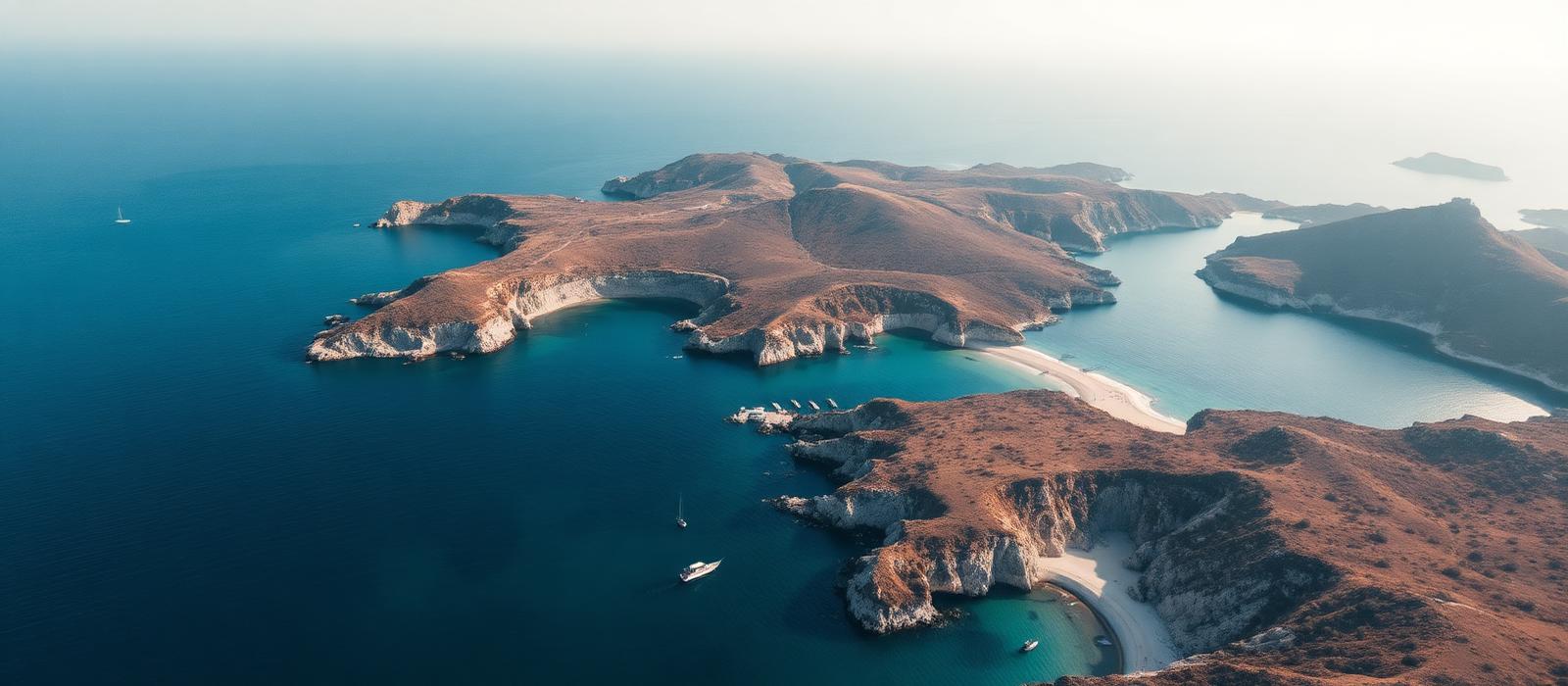
Aerial view of an indented coastline with bays and offshore islands
Ocean cruise geography follows coastlines and island groups rather than borders.

Mediterranean

A port-intensive, multi-country sea between southern Europe, western Asia and North Africa.

Season
Widest choice from spring to autumn; the western Mediterranean also carries winter sailings.
Cruise areas
Western Mediterranean, Adriatic, Greek Islands and Aegean
Gateways in the atlas
Barcelona, Civitavecchia, Marseille, Genoa, Savona, Palma de Mallorca, Valencia, Naples, Valletta, Venice, Trieste, Piraeus, Istanbul

Caribbean

A warm-water island region reached mainly from Florida and San Juan, with short hops between islands.

Season
Year-round. The Atlantic hurricane season runs 1 June to 30 November.
Cruise areas
Florida gateways, Bahamas, Eastern Caribbean, Western Caribbean, Southern Caribbean
Gateways in the atlas
Miami, Fort Lauderdale, Port Canaveral, San Juan, Bridgetown

Alaska

A cool-water North Pacific region of protected inland waterways, glaciers and few road-connected ports.

Season
A summer-only season; ships are redeployed elsewhere for the rest of the year.
Cruise areas
Southern gateways, Inside Passage, Gulf of Alaska
Gateways in the atlas
Seattle, Vancouver, Seward, Whittier

Norwegian Fjords

A narrow, mountainous coast where ships sail inland along fjords, with a short, concentrated summer season.

Season
Concentrated in the northern summer; the Arctic section has the shortest window of all.
Cruise areas
Western Fjords, Southern Norway and the Oslofjord, Arctic Norway and the North Cape
Gateways in the atlas
Bergen, Stavanger, Oslo, Tromsø

Baltic and Northern Europe

A capital-city cruise region on an almost enclosed sea, with short hops between historic northern European ports.

Season
A summer season, roughly May to September, with very little winter activity.
Cruise areas
North Sea and Danish gateways, Sweden and the Gulf of Finland, Southern and eastern Baltic
Gateways in the atlas
Copenhagen, Kiel, Warnemünde (Rostock), Amsterdam, Stockholm

Asia

A very large region split between the year-round tropics of Southeast Asia and the strongly seasonal waters of Japan, Korea and China.

Season
Year-round in the tropical south; concentrated in spring and autumn in Japan, Korea and China.
Cruise areas
Southeast Asia, Greater China and Taiwan, Japan and Korea
Gateways in the atlas
Singapore, Hong Kong, Shanghai, Keelung, Yokohama, Tokyo, Busan

Explainer

Why departure geography matters more than it looks

A cruise begins geographically before the ship moves. Where a region's gateways sit decides how far the ship has to travel before the first port, how much of the week is spent repositioning, and how easy the region is to reach in the first place.

The three big northern-hemisphere regions show three different patterns. Caribbean itineraries are commonly built around gateways on the Florida coast and in Puerto Rico, so the ship leaves the mainland and enters an island field. The Mediterranean is far more distributed: Barcelona, Civitavecchia, Venice, Piraeus and Athens sit around the edge of the same sea, and a voyage can be assembled from almost any of them. Alaska splits again — a departure from Seattle or Vancouver leads into the sheltered Inside Passage and usually returns the same way, while Seward and Whittier sit at the far end of the Gulf and tend to belong to one-way sailings.

That is why the same nominal length of voyage covers very different ground in different regions. Read the gateway first; the shape of the itinerary usually follows from it.

Explainer

Why some regions produce more sea days than others

A sea day is not a design choice so much as an arithmetic result. Distance between ports, how densely the coast or island group is packed, and where the ship started all decide how much of the itinerary is spent moving rather than arriving.

Where ports sit close together — an island group, an indented coastline, a sea ringed by cities — a ship can call somewhere most mornings. Where the geography puts long water between the useful stops, or where the gateway sits well outside the area being visited, some of that distance has to be crossed at sea. Regions with fjords, glaciers or wide open crossings also spend time on scenic cruising, which is neither a port call nor simply transit.

So the useful question about an itinerary is not "how many sea days" in the abstract, but what the geography between those ports actually requires.

Scale

From a region to a place you can stand in

Each step down the chain narrows the geography. The atlas stops one level above the individual sailing.

  1. Region

    Mediterranean

    A sea with its own season and rhythm.

  2. Cruise area

    Western Mediterranean

    A workable subregion within one voyage's reach.

  3. Gateway

    Barcelona

    A place where voyages begin, end or call.

  4. Below this level

    Individual sailings

    Dates, ships and prices live with operators and agents.

Ports

Port geography, region by region

Every port drawn on the ocean atlas, grouped by the cruise area it belongs to. Open a region to read its ports.

Mediterranean19 ports · 3 cruise areas

Western Mediterranean

  • BarcelonaSpain

    Gateway and port of call. One of the main turnaround ports of the western Mediterranean, with dedicated cruise terminals operated under the Port de Barcelona authority.

  • CivitavecchiaItaly

    Gateway and port of call. The sea gateway for Rome, roughly 70 km north-west of the city.

  • MarseilleFrance

    Gateway and port of call. France's largest commercial port and a French home port for western Mediterranean itineraries.

  • GenoaItaly

    Gateway and port of call. A Ligurian port used as an Italian home port for western Mediterranean itineraries.

  • SavonaItaly

    Gateway and port of call. A Ligurian port west of Genoa, also used as an Italian home port.

  • Palma de MallorcaSpain

    Gateway and port of call. The main port of Mallorca and the principal cruise port of the Balearic Islands.

  • ValenciaSpain

    Gateway and port of call. A Spanish port on the Gulf of Valencia, used both as a home port and as a call.

  • NaplesItaly

    Gateway and port of call. The port of Naples lies close to the city centre and serves the wider Bay of Naples area.

  • LivornoItaly

    Port of call. A Tuscan port used as the sea access point for Florence and Pisa.

  • VallettaMalta

    Gateway and port of call. Ships berth in Malta's Grand Harbour, beside the capital.

Adriatic

  • VeniceItaly

    Gateway and port of call. Cruise access to Venice is regulated, and larger ships are handled outside the historic lagoon channels.

  • TriesteItaly

    Gateway and port of call. A northern Adriatic port in north-east Italy, close to the Slovenian border.

  • DubrovnikCroatia

    Port of call. A walled-city port on the southern Croatian coast and a common Adriatic call.

Greek Islands and Aegean

  • PiraeusGreece

    Gateway and port of call. The main Greek turnaround port and the sea gateway for Athens.

  • MykonosGreece

    Port of call. A Cyclades island call; larger ships are handled at the newer port north of the old town.

  • SantoriniGreece

    Port of call. Ships anchor offshore in the caldera; passengers come ashore by tender.

  • RhodesGreece

    Port of call. A Dodecanese port beside the medieval old town, close to the Turkish coast.

  • KuşadasıTürkiye

    Port of call. A Turkish Aegean port used as the sea access point for the Ephesus area.

  • IstanbulTürkiye

    Gateway and port of call. A city on the Bosphorus strait, used both as a turnaround port and as a call.

Open the Mediterranean page →
Caribbean14 ports · 5 cruise areas

Florida gateways

  • MiamiUnited States

    Departure gateway. PortMiami is one of the largest cruise embarkation ports in the world.

  • Fort LauderdaleUnited States

    Departure gateway. Port Everglades is a major Florida turnaround port for Caribbean sailings.

  • Port CanaveralUnited States

    Departure gateway. A Florida cruise port on the Atlantic coast east of Orlando.

Bahamas

  • NassauThe Bahamas

    Port of call. The capital of The Bahamas and the most frequently called Bahamian port.

Eastern Caribbean

  • San JuanPuerto Rico (United States)

    Gateway and port of call. The main turnaround port inside the Caribbean itself, which shortens sea time to the eastern islands.

  • Charlotte Amalie, St. ThomasU.S. Virgin Islands

    Port of call. The main port of St Thomas in the U.S. Virgin Islands.

  • Philipsburg, St. MaartenSint Maarten

    Port of call. The main port on the Dutch side of Sint Maarten.

Western Caribbean

  • George TownCayman Islands

    Port of call. Ships anchor offshore and passengers come ashore by tender.

  • CozumelMexico

    Port of call. An island port off Mexico's Yucatán peninsula and one of the busiest western Caribbean calls.

  • FalmouthJamaica

    Port of call. A purpose-built cruise port on Jamaica's north coast.

  • Ocho RiosJamaica

    Port of call. A call on Jamaica's north coast, east of Falmouth.

Southern Caribbean

  • BridgetownBarbados

    Gateway and port of call. Used both as a port of call and as a turnaround port for southern Caribbean itineraries.

  • WillemstadCuraçao

    Port of call. The capital of Curaçao, where ships berth beside the historic harbour entrance.

  • OranjestadAruba

    Port of call. The capital and main port of Aruba, off the Venezuelan coast.

Open the Caribbean page →
Alaska9 ports · 3 cruise areas

Southern gateways

  • SeattleUnited States

    Departure gateway. A U.S. turnaround port for round-trip Inside Passage sailings.

  • VancouverCanada

    Departure gateway. The Canadian turnaround port used for both round-trip and one-way Gulf of Alaska sailings.

Inside Passage

  • JuneauUnited States

    Port of call. Alaska's capital, reachable only by sea or air.

  • KetchikanUnited States

    Port of call. The southernmost Alaskan cruise port on the Inside Passage.

  • SkagwayUnited States

    Port of call. A port at the northern end of the Inside Passage, at the head of the Taiya Inlet.

  • SitkaUnited States

    Port of call. A port on Baranof Island, on the outer, Pacific-facing side of the Alaskan panhandle.

  • Icy Strait Point (Hoonah)United States

    Port of call. A small call site next to Hoonah on Chichagof Island, developed for cruise visits.

Gulf of Alaska

  • SewardUnited States

    Departure gateway. One of the two northern turnaround ports for one-way Gulf of Alaska sailings, connected onward to Anchorage by road and rail.

  • WhittierUnited States

    Departure gateway. A port on Prince William Sound, used as a turnaround point for Gulf of Alaska cruises.

Open the Alaska page →
Norwegian Fjords10 ports · 3 cruise areas

Western Fjords

  • BergenNorway

    Gateway and port of call. The main turnaround port of the Norwegian fjord coast and the usual start or end point for western fjord itineraries.

  • StavangerNorway

    Gateway and port of call. A southern fjord-coast port with berths close to the old town, also used as a turnaround port by some operators.

  • ÅlesundNorway

    Port of call. A coastal town port that serves as the sea access point for the Geirangerfjord area and the surrounding Sunnmøre coast.

  • GeirangerNorway

    Port of call. An anchorage call at the head of the Geirangerfjord, part of the UNESCO-listed West Norwegian Fjords; passengers usually come ashore by tender.

  • FlåmNorway

    Port of call. A small village berth at the inner end of the Aurlandsfjord, reached after several hours of navigation inside the Sognefjord system.

  • OldenNorway

    Port of call. An inner-fjord call in the Nordfjord, used as the access point for the Jostedalsbreen glacier area.

Southern Norway and the Oslofjord

  • OsloNorway

    Gateway and port of call. The Norwegian capital, at the head of the Oslofjord, used both as a call and as a turnaround port.

  • KristiansandNorway

    Port of call. A southern coastal city port often called on the leg between northern Europe and the fjords.

Arctic Norway and the North Cape

  • TromsøNorway

    Gateway and port of call. The largest city north of the Arctic Circle in Norway and the main port of Arctic Norway itineraries.

  • HonningsvågNorway

    Port of call. The port on Magerøya used to reach the Nordkapp (North Cape) plateau, at the northern limit of mainland Norway.

Open the Norwegian Fjords page →
Baltic and Northern Europe10 ports · 3 cruise areas

North Sea and Danish gateways

  • CopenhagenDenmark

    Gateway and port of call. The principal Baltic turnaround port, handled by Copenhagen Malmö Port, with several cruise quays at different distances from the city centre.

  • KielGermany

    Gateway and port of call. A German turnaround port at the Baltic end of the Kiel Canal, widely used for fly-cruise and drive-to Baltic sailings.

  • Warnemünde (Rostock)Germany

    Gateway and port of call. Rostock's cruise terminal on the Baltic coast, and a turnaround port as well as a call.

  • AmsterdamNetherlands

    Gateway and port of call. A North Sea turnaround port reached through the North Sea Canal and sea lock, used as the western starting point for many northern European itineraries.

Sweden and the Gulf of Finland

  • StockholmSweden

    Gateway and port of call. A turnaround port and call, approached through several hours of archipelago navigation before the ship reaches the city quays.

  • HelsinkiFinland

    Port of call. The Finnish capital on the Gulf of Finland, with cruise quays both close to and some distance from the centre.

  • TallinnEstonia

    Port of call. An Estonian port whose cruise quays sit within walking distance of the walled old town.

Southern and eastern Baltic

  • RigaLatvia

    Port of call. A river-city port on the Daugava, reached from the Gulf of Riga, with berths near the historic centre.

  • GdyniaPoland

    Port of call. The Polish cruise call used to reach Gdańsk and the Tri-City area on the southern Baltic shore.

  • KlaipėdaLithuania

    Port of call. Lithuania's only seaport, at the entrance to the Curonian Lagoon.

Open the Baltic and Northern Europe page →
Asia11 ports · 3 cruise areas

Southeast Asia

  • SingaporeSingapore

    Gateway and port of call. The main turnaround port of Southeast Asian cruising, with dedicated cruise facilities under the Singapore port authority.

  • Laem ChabangThailand

    Port of call. Thailand's deep-sea port on the Gulf of Thailand and the sea access point for Bangkok, roughly two hours away by road.

  • PhuketThailand

    Port of call. An Andaman Sea call on the western side of the Malay Peninsula, on itineraries that leave the South China Sea side.

  • Phú MỹVietnam

    Port of call. The commercial port used by cruise ships calling for Ho Chi Minh City, which is around two hours inland.

Greater China and Taiwan

  • Hong KongHong Kong SAR, China

    Gateway and port of call. A turnaround port and call, with the Kai Tak cruise terminal built on the former airport runway in Victoria Harbour.

  • ShanghaiChina

    Gateway and port of call. A major Chinese turnaround port; cruise ships use terminals on the Huangpu and at Wusongkou downriver from the city.

  • KeelungTaiwan

    Gateway and port of call. The northern Taiwanese port that serves Taipei, used both as a call and as a turnaround port.

Japan and Korea

  • YokohamaJapan

    Gateway and port of call. Japan's principal cruise turnaround port, in the Tokyo Bay area and connected to central Tokyo by rail.

  • TokyoJapan

    Gateway and port of call. The Tokyo International Cruise Terminal in Tokyo Bay, used alongside Yokohama for larger ships.

  • BusanSouth Korea

    Gateway and port of call. South Korea's largest port, on the Korea Strait, and a common call on Japan and Korea itineraries.

  • NahaJapan

    Port of call. The port of Okinawa's capital, on the sea route between Japan and Taiwan or mainland China.

Open the Asia page →

Explainer

A port is not the same thing as a gateway

The atlas marks two different roles, and the distinction is the single most useful thing to carry into reading an itinerary. A gateway is a place a voyage starts or ends: it is where you fly to, where luggage goes on board, where the clock of the itinerary begins. A port of call is somewhere the ship stops during the voyage, usually for part of a day.

Plenty of places do both. Barcelona is a major Mediterranean gateway and is also visited on itineraries that begin elsewhere. Juneau, by contrast, appears in the atlas as a place ships call at rather than a place most Alaska voyages begin. Miami is overwhelmingly a starting point.

The practical consequence is that the same city name means two very different days. As a gateway it implies flights, a hotel night and embarkation; as a port of call it implies a few hours ashore inside a fixed window. Checking which role a place is playing tells you what the itinerary is actually offering.

Explainer

Why geography, not preference, sets the season

Each region in the atlas carries a season, and those seasons are a property of the place rather than of the industry. Weather windows, sea conditions, daylight and ice decide when a coastline can be worked comfortably, and ships move to where those conditions are favourable.

High-latitude regions are the clearest case: Alaska, the Norwegian Fjords and the Baltic concentrate into the northern summer, when daylight is long and conditions are mildest. The Mediterranean has a longer usable shoulder either side of summer. Tropical regions are navigable year-round, and their calendars are shaped by weather patterns rather than by daylight. Antarctica reverses everything, because its usable window is the southern summer.

This is also why ships reposition across the world at particular times of year: they are following the seasons the geography allows.

Sources & verification

How this atlas is built

Coastlines, borders and water bodies come from Natural Earth. Port and city facts come from port and waterway authorities, cruise-region and industry bodies, and public authorities. Cruise lines are used only as sources for facts about their own operations.

Show the complete source list

Every source used on this page

Facts on this page are taken from the sources below. Cruise lines are used only as sources for facts about their own operations, never as sources of independent assessment.

New to cruise geography? Start here walks through the same structure in reading order.