Skip to content
SnapVoyagesIndependent cruise information
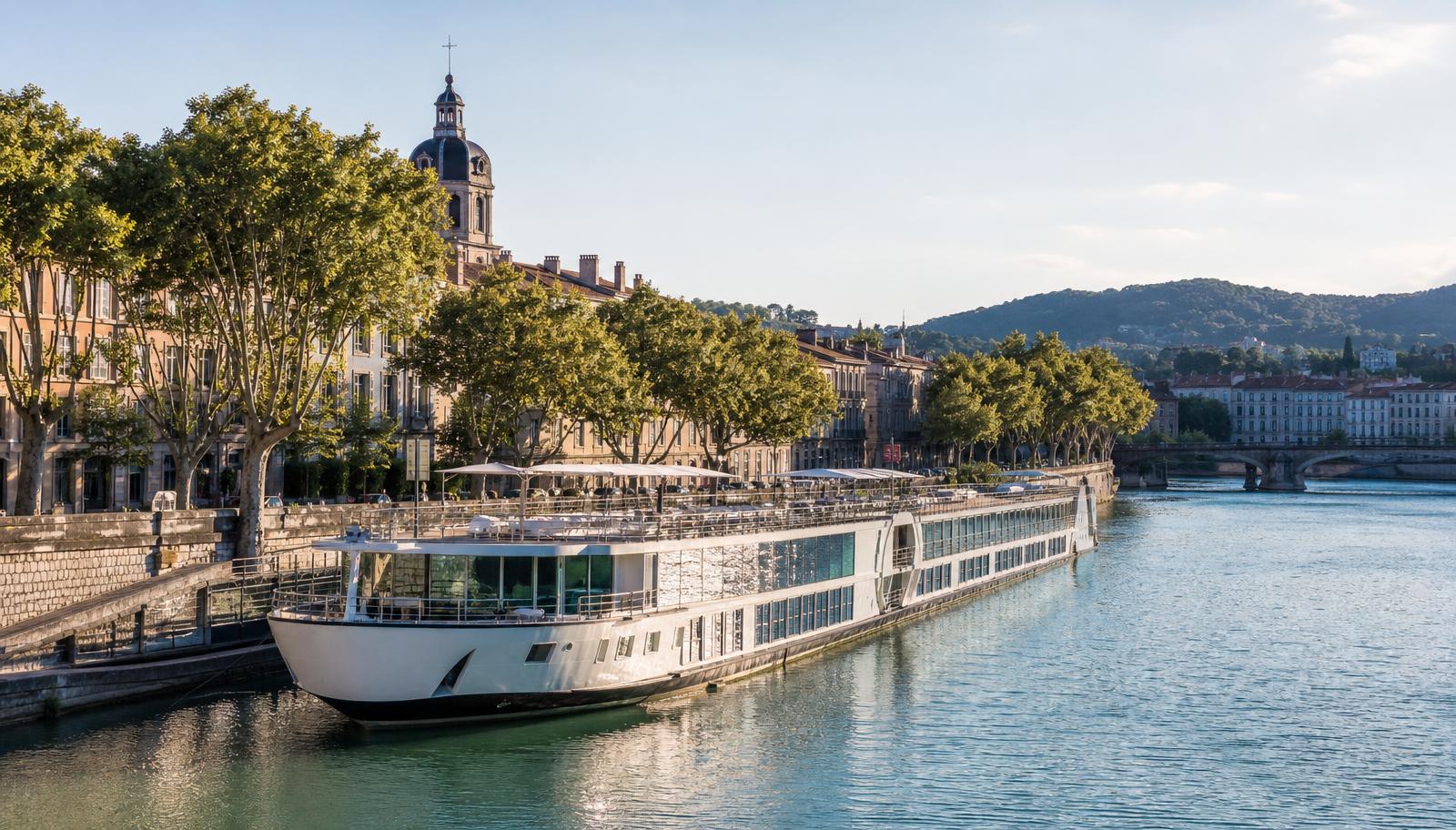
Illustrative AI-generated scene of a river vessel entering a large canal lock beside a half-timbered German town

River cruise system

Main and Main–Danube Canal River Cruises

The Main is the link between the Rhine and the Danube. Cruising it means Franconian wine towns, a long chain of locks, and an artificial canal that carries vessels over the European watershed between the North Sea and the Black Sea.

The short answer

The Main is rarely cruised on its own. It is the middle third of the long Amsterdam-to-Budapest route, and most voyages that use it are travelling between the Rhine and the Danube rather than visiting the Main as a destination.

That said, the stretch has its own character: Frankfurt, then a heavily meandering river through Franconia with small half-timbered towns, then Würzburg and Bamberg, and finally a canal climbing away from the river valley altogether.

At a glance

Where it runs
Southern Germany, between the Rhine at Mainz and the Danube at Kelheim
Length
Main about 525 km; the Main–Danube Canal about 171 km
Countries
Germany
Cruised stretch
Mainz through Frankfurt, Würzburg, Bamberg and Nuremberg to Kelheim
Season
Roughly April to October, plus a strong December Christmas-market period
Main start and end points
Frankfurt, Nuremberg

The Main and the Main–Danube Canal as a corridor

  1. River

    Main and the Main–Danube Canal

    Southern Germany, between the Rhine at Mainz and the Danube at Kelheim

  2. Cruised stretch

    Mainz through Frankfurt, Würzburg, Bamberg and Nuremberg to Kelheim

  3. Stretches

    2 in downstream order

    Lower Main and the Franconian wine country → Upper Main and the Main–Danube Canal

  4. Places along it

    6 cities and stops

    Listed in downstream order further down this page.

Why a river is not a region

One waterway, in a fixed order

A cruise region can be entered from several directions. A river corridor can only be travelled upstream or downstream along the same line.

The Main–Danube Canal is a piece of engineering rather than a landscape. It is the reason a continuous inland voyage across Europe is possible at all, and it involves the highest lock chain and the most lock transits of any European cruise route.

The Main and the Main–Danube Canal corridor

The river's own course, with the cities river cruises use. Select a stretch to focus on it.

GERMANYFrankfurt am MainMiltenbergWürzburgBambergNurembergKelheim

Every city on the map

  • Frankfurt am MainGermany, stop, and a start or end point.
  • MiltenbergGermany, stop along the way.
  • WürzburgGermany, stop along the way.
  • BambergGermany, stop along the way.
  • NurembergGermany, start or end point.
  • KelheimGermany, stop along the way.

The line is the river's own course, not the track of any voyage. Cities are the ones needed to understand the corridor, not a complete list of everywhere a vessel can tie up.

What cruising the Main and the Main–Danube Canal actually means

A connecting corridor
The Main's main role in cruising is joining the Rhine and Danube systems. Long Amsterdam-to-Budapest voyages exist only because of it.
The most locks of any European route
The Main is fully canalised and the canal climbs a watershed, so a voyage through this corridor passes through dozens of locks — several every day.
The highest point in European river cruising
The canal summit reach lies about 406 metres above sea level, higher than any other water a European cruise vessel reaches.
Small towns rather than big cities
Apart from Frankfurt and Nuremberg, the stops are small: Miltenberg, Wertheim, Würzburg, Bamberg. Moorings are usually within walking distance of the centre.
A strong Christmas-market pattern
Nuremberg, Bamberg, Würzburg and Frankfurt all hold large Advent markets close to the water, which makes this one of the busiest December corridors in Europe.
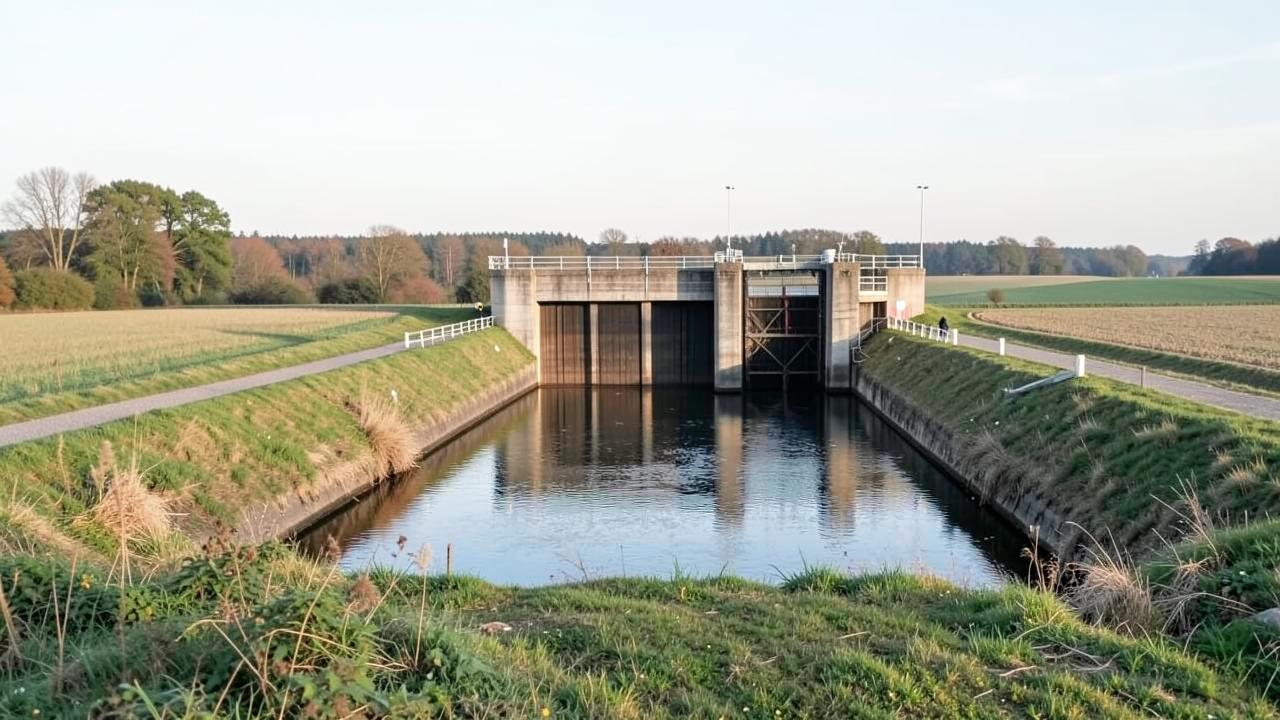
A canalised waterway crossing farmland towards a large concrete lock chamber
Engineered water: crossing the watershed between two river basins means climbing and descending through lock chambers cut across open farmland.

Why the Main exists on a cruise map at all

The Main is not, by itself, one of the great cruise rivers. It matters because of what it joins: it is the link that turns the Rhine and the Danube into one continuous inland waterway across Europe. Without it there is no such thing as an Amsterdam-to-Budapest voyage.

The join is not natural. The Main flows west into the Rhine and the Danube flows east to the Black Sea, and between the two headwaters stands the European watershed. The Main–Danube Canal crosses it by climbing a staircase of locks to a summit level and then descending the other side — a ship literally goes uphill, over the divide, and downhill again.

That is why voyages on this stretch feel lock-heavy and slow-moving, and why the towns along it are small and closely spaced. The corridor is a passage between two river systems, and the pleasant Franconian towns along the way are what the passage runs through.

Crossing the European watershed
  1. Rhine at Mainz

  2. Lower Main

  3. Upper Main

  4. Canal ascent

  5. Summit level

  6. Descent to Kelheim

  1. The Main leaves the Rhine at low level.
  2. Frankfurt and the Franconian wine towns.
  3. Würzburg and Bamberg; the river narrows.
  4. Locks lift the ship towards the divide.
  5. The highest point any ship reaches in Europe's network.
  6. Down the far side into the Danube.

The drawing shows sequence, not proportion. The point is the shape of the journey: a ship on this route is lifted over a watershed rather than following a single river downhill.

The main stretches

A river has an order rather than fuzzy edges. These are the stretches the corridor divides into, in the direction the water flows.

Lower Main and the Franconian wine country

Mainz and the Rhine junction upstream to WürzburgGermany

The Main leaves the Rhine at Mainz and winds east through Frankfurt into Franconia, a landscape of vineyard slopes, half-timbered towns and small cities that most visitors reach from the river rather than the motorway.

Navigation: Fully canalised with a long series of navigation locks. The river meanders heavily, so cruising distance is far greater than the distance across country.

Upper Main and the Main–Danube Canal

Würzburg through Bamberg and Nuremberg to Kelheim on the DanubeGermany

The link that makes a continuous Amsterdam-to-Black-Sea waterway possible. Above Bamberg the natural river ends and the route becomes an artificial canal climbing over the European watershed between the North Sea and Black Sea basins.

Navigation: The canal rises to about 406 metres above sea level, the highest point reached by any cruise vessel in Europe, through a sequence of locks including several with lifts of around 25 metres.

Cities and stops along the river

The main places along the corridor, in downstream order within each stretch.

Cities and stops used by Main and the Main–Danube Canal river cruises
PlaceCountryStretchRoleWhy it matters
Frankfurt am MainGermanyLower Main and the Franconian wine countryStop, and a start or end pointThe largest city on the Main and a common start or end point for Main and Rhine voyages.
MiltenbergGermanyLower Main and the Franconian wine countryStop along the wayA small half-timbered town in a bend of the river, typical of the lower Main stops.
WürzburgGermanyLower Main and the Franconian wine countryStop along the wayThe centre of Franconian wine country; the Residence palace is World Heritage listed.
BambergGermanyUpper Main and the Main–Danube CanalStop along the wayWhere the natural river ends and the canal begins. The old town is inscribed as World Heritage.
NurembergGermanyUpper Main and the Main–Danube CanalStart or end pointOn the canal rather than a natural river, and the most used turnaround between the Rhine and Danube systems.
KelheimGermanyUpper Main and the Main–Danube CanalStop along the wayThe canal's southern end, where it joins the Danube.

How voyages are structured

The shapes voyages take along this corridor: where they start, which way they run and how far they reach.

Rhine to Danube through-voyages

The long corridor route between the Dutch cities and Vienna or Budapest, using the Main and the canal as the middle section.

Main-only and Franconia voyages

Shorter itineraries between Frankfurt or Mainz and Bamberg or Nuremberg, treating the Franconian towns as the point of the voyage.

December market voyages

Short late-year sailings between the Main and Rhine cities, with little time under way and most of the interest ashore.

When voyages operate

The corridor is canalised and regulated, so it is dependable through the season and less exposed to low water than the free-flowing Rhine or Elbe.

Ice can close the canal in a hard winter, which is one reason the season stops after the December market period rather than continuing.

Because the route is a link between two systems, its season tracks the Rhine and Danube seasons rather than having one of its own.

Cruise activity through the year — the Main and the Main–Danube Canal
Essentially no cruisesLow seasonShoulder periodPeak cruise activity
Read this as a table
Relative cruise activity by month in the the Main and the Main–Danube Canal cruise region
MonthCruise activity
JanEssentially no cruises
FebEssentially no cruises
MarLow season
AprShoulder period
MayPeak cruise activity
JunPeak cruise activity
JulPeak cruise activity
AugPeak cruise activity
SepPeak cruise activity
OctPeak cruise activity
NovLow season
DecShoulder period

An indicative pattern of when voyages operate, drawn from waterway and season information rather than any operator's schedule.

Practical conditions that shape a voyage

Conditions on this river that can change what actually happens on a voyage.

Locks run through the night

To keep to a schedule, vessels transit locks at all hours. On this corridor that is a nightly reality rather than an occasional one.

The canal is not scenic

Long stretches of the Main–Danube Canal run through cuttings and embankments with limited views. This is a transit section of an otherwise varied route.

Nuremberg's mooring is outside the old town

The canal does not pass through the historic centre, so the city is reached by transfer rather than on foot.

Through-voyages are long

Amsterdam to Budapest is a two-week class of itinerary. The Main section is one part of it, not a standalone trip.

What to know about the Main and the Main–Danube Canal

Key facts

  • The Main is about 525 km long and is canalised for its whole navigable length.
  • The Main–Danube Canal, opened in 1992, is about 171 km long.
  • The canal's summit reach is roughly 406 m above sea level.
  • The corridor connects the North Sea and Black Sea drainage basins.
  • Bamberg's old town and the Würzburg Residence are UNESCO World Heritage sites.
  • This route has more lock transits than any other European cruise corridor.

What to check when comparing voyages

  • Whether the voyage is a through-route to the Danube or a Main-only itinerary.
  • How much of the route is canal rather than river.
  • Tolerance for frequent lock transits, including at night.
  • Whether the December sailing is a Christmas-market pattern rather than a normal voyage.
  • Which stops are walkable and which need a transfer, especially Nuremberg.
  • Danube river cruises

    A west-to-east corridor from Germany to the Black Sea, cruised mainly between Passau, Vienna, Budapest and the Danube Delta.

  • Rhine river cruises

    A south-to-north corridor from Basel to the Dutch delta, built around the Upper Middle Rhine Valley gorge.

  • Seine river cruises

    A short French corridor from Paris downstream through Normandy to Rouen and the Seine estuary.

  • Rhône & Saône river cruises

    A north–south French corridor from Burgundy through Lyon to Provence and the Camargue.

  • Douro river cruises

    A short Portuguese valley from Porto upstream through the terraced Alto Douro wine country to the Spanish border.

  • Moselle river cruises

    A narrow German wine valley from the Rhine at Koblenz upstream past Cochem and Bernkastel to Trier and Luxembourg.

  • Elbe river cruises

    A Czech–German corridor from Prague and the sandstone gorge through Dresden and Magdeburg to Hamburg.

  • Nile river cruises

    A short Egyptian reach between Luxor and Aswan linking the temple sites, plus a separate Lake Nasser circuit.

  • Mekong river cruises

    A Vietnam–Cambodia corridor from the Mekong delta through Phnom Penh towards the Tonlé Sap and Angkor.

  • Mississippi river cruises

    The long North American corridor from New Orleans upstream to St. Paul, with Ohio and Cumberland connections.

  • Columbia & Snake river cruises

    A Pacific Northwest corridor from Astoria and Portland through the Columbia Gorge and up the Snake to Idaho.

  • How river cruising differs from ocean cruising

    The structural differences: locks, water level, city-centre mooring and no sea days.

Sources & verification

Facts on this page are taken from the sources below. Cruise lines are used only as sources for facts about their own operations, never as sources of independent assessment.