Skip to content
SnapVoyagesIndependent cruise information
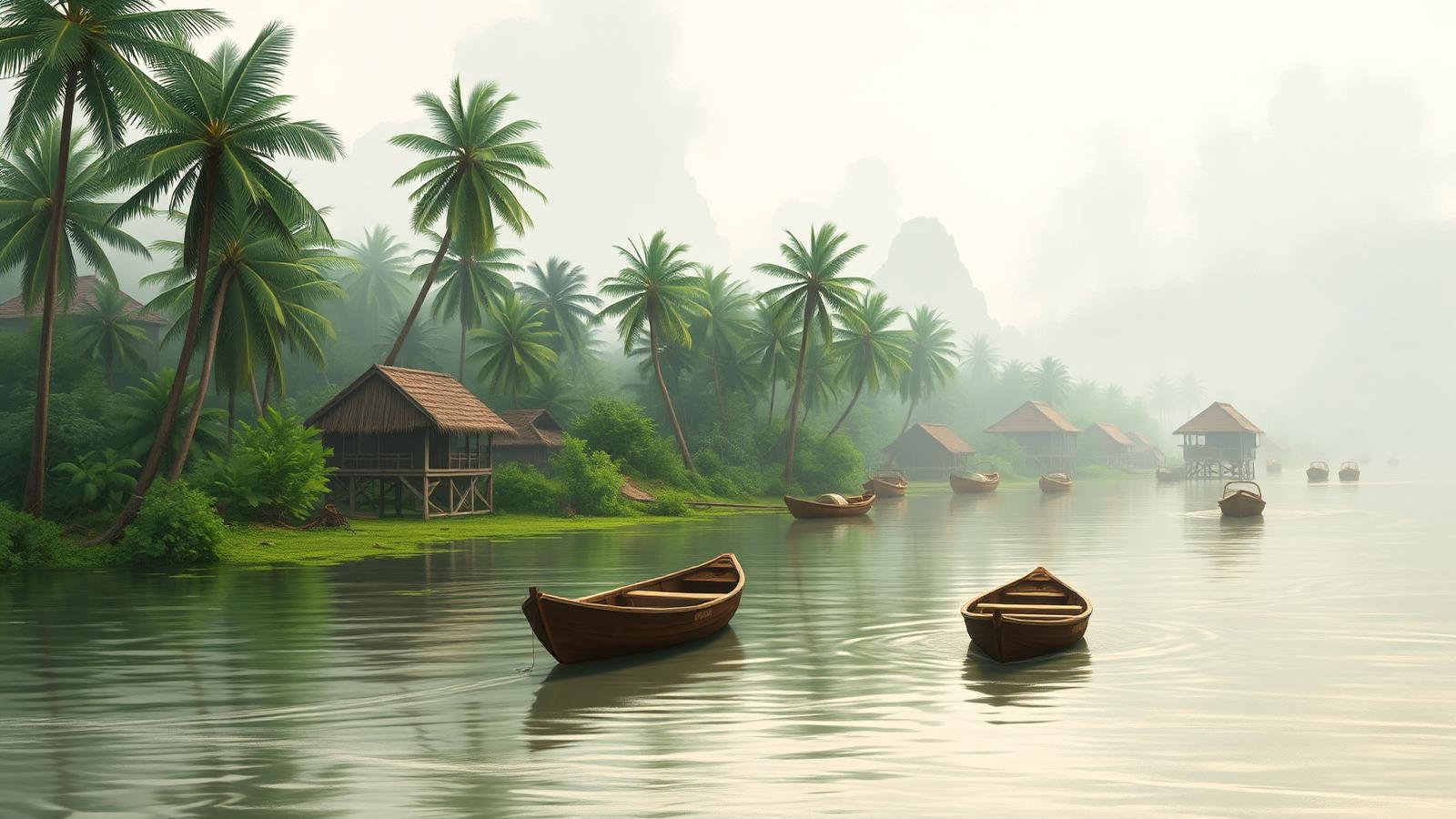
Illustrative AI-generated scene of a wide tropical river with wooden boats, palms and stilt houses along a green bank

River cruise system

Mekong River Cruises

The Mekong is cruised as a corridor between Vietnam and Cambodia, from the delta channels near Ho Chi Minh City to Phnom Penh and the Tonlé Sap towards Angkor. It is a working river of villages and markets rather than a scenic gorge.

The short answer

The cruised Mekong is a two-country corridor of roughly 500 kilometres. Voyages run between the Vietnamese delta and Cambodia, crossing an international border partway, and are almost always joined to hotel stays in Ho Chi Minh City and Siem Reap, neither of which is on the route.

The river's character is human rather than geological. The delta is one of the most densely farmed and navigated landscapes in Asia; in Cambodia the banks become quieter, with stilt villages, silt bars and pagodas. There is no equivalent of the Rhine gorge or the Douro terraces here.

At a glance

Where it runs
South-east Asia, in southern Vietnam and Cambodia
Length
About 4,900 km in total; roughly 500 km routinely cruised
Countries
Vietnam and Cambodia (the upper Mekong in Laos, Thailand, Myanmar and China is a separate matter)
Cruised stretch
The Vietnamese delta to Phnom Penh, Kampong Cham and the Tonlé Sap
Season
Roughly August to April, following the water level
Main start and end points
Ho Chi Minh City by road, Phnom Penh, Siem Reap

The Mekong as a corridor

  1. River

    Mekong

    South-east Asia, in southern Vietnam and Cambodia

  2. Cruised stretch

    The Vietnamese delta to Phnom Penh, Kampong Cham and the Tonlé Sap

  3. Stretches

    2 in downstream order

    The Vietnamese delta → The Cambodian Mekong and the Tonlé Sap

  4. Places along it

    6 cities and stops

    Listed in downstream order further down this page.

Why a river is not a region

One waterway, in a fixed order

A cruise region can be entered from several directions. A river corridor can only be travelled upstream or downstream along the same line.

Season is the dominant variable. The monsoon changes the level of the Mekong system by many metres, and the Tonlé Sap actually reverses its direction of flow each year — which decides how close a vessel can get to Siem Reap.

The Mekong corridor

The river's own course, with the cities river cruises use. Select a stretch to focus on it.

CAMBODIAMy Tho and Cai BeSa ĐécChâu ĐốcPhnom PenhKampong ChamSiem Reap

Every city on the map

  • My Tho and Cai BeVietnam, start or end point, serving Ho Chi Minh City, roughly two hours away by road.
  • Sa ĐécVietnam, stop along the way.
  • Châu ĐốcVietnam, stop along the way.
  • Phnom PenhCambodia, stop, and a start or end point.
  • Kampong ChamCambodia, stop along the way.
  • Siem ReapCambodia, start or end point, serving Angkor; reached via the Tonlé Sap or by road, depending on water level.

The line is the river's own course, not the track of any voyage. Cities are the ones needed to understand the corridor, not a complete list of everywhere a vessel can tie up.

What cruising the Mekong actually means

A two-country corridor with a real border
Voyages cross between Vietnam and Cambodia mid-route, with immigration formalities handled on the river. Visa requirements are set by each state.
The gateways are not on the river
Ho Chi Minh City and Siem Reap are both reached by road. The vessel joins the itinerary in the delta and leaves it near the Tonlé Sap.
Monsoon, not rainfall, sets the level
The Mekong's flow varies enormously between the wet and dry seasons, and the Tonlé Sap reverses direction annually. Which stops are reachable depends on when you travel.
A lived-in river
Floating markets, fish farms, ferries and cargo boats are the everyday traffic. The interest is in that activity rather than in wilderness or dramatic terrain.
Landings are often informal
Many village stops have no quay at all; passengers go ashore by tender or over a temporary gangway onto a bank.
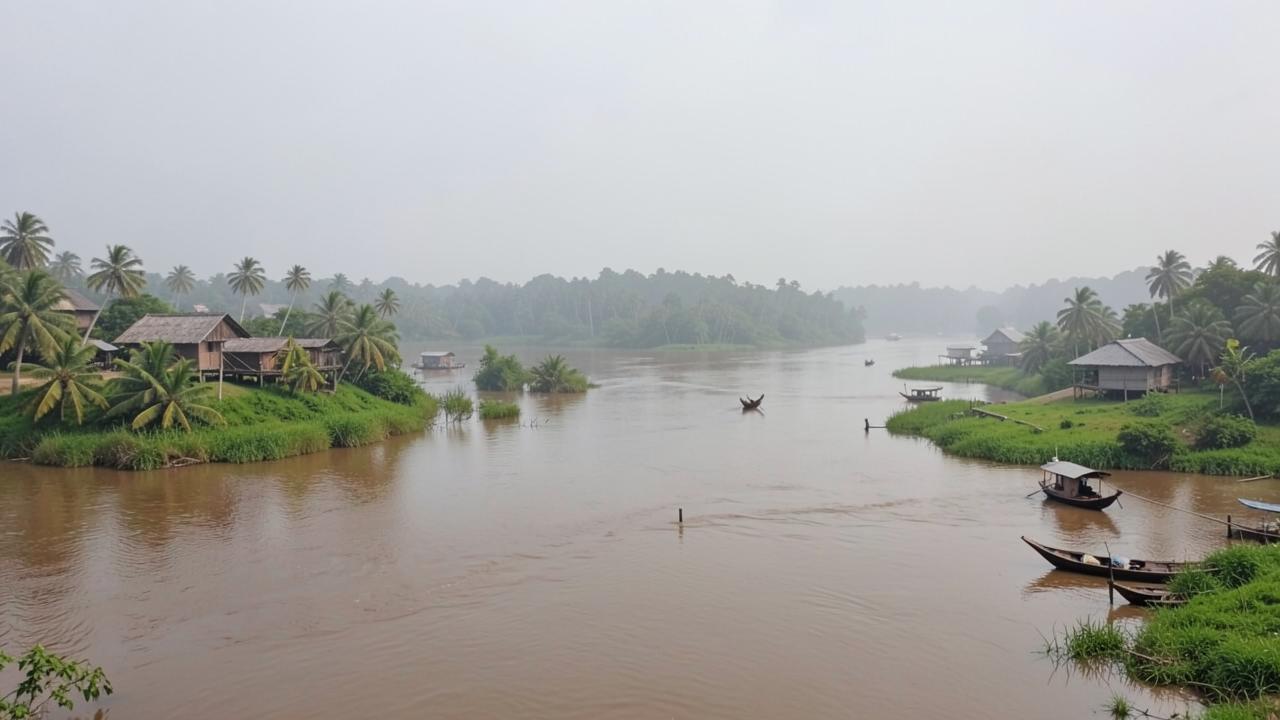
A wide brown tropical lowland river with low green banks, palms, stilt houses and small wooden boats
A broad lowland delta river: low banks, settlement built above the water line, and everyday movement by small boat.

Why a Mekong voyage crosses a border and changes size as it goes

The cruised Mekong is not a single national river. Voyages run between the Vietnamese delta and Cambodia, so the trip includes a river border crossing with immigration formalities carried out on the water — an ordinary part of the itinerary here and not an incident.

The delta end is a maze rather than a channel. The river splits into many branches, and much of what there is to see — floating markets, brick kilns, workshops on stilts — lies down waterways too narrow for the vessel itself. Going ashore is therefore often done by small local boat rather than by walking off a quay, which makes the excursion pattern quite different from a European river.

Upstream the river is strongly seasonal. Flow rises hugely in the wet season and falls in the dry one, and the Tonlé Sap tributary reverses its direction of flow as the main river rises. How far a vessel can travel, and whether the lake stretch towards Siem Reap is reachable by water at all, depends on where the season sits.
The seasonal mechanism

A tributary that flows backwards

When the Mekong is high it pushes water up the Tonlé Sap, expanding the lake; when it falls, the flow reverses and drains back out. The cruising area expands and contracts with it.

The main stretches

A river has an order rather than fuzzy edges. These are the stretches the corridor divides into, in the direction the water flows.

The Vietnamese delta

My Tho and Cai Be upstream to the Cambodian border at Chau DocVietnam

A dense, populated landscape of branching channels, floating markets, orchards and villages, reached from Ho Chi Minh City by road. The river here is a working thoroughfare rather than a scenic corridor.

Navigation: The delta is a network of channels rather than a single line, and the routes used depend on depth and season.

The Cambodian Mekong and the Tonlé Sap

Phnom Penh upstream to Kampong Cham, and the Tonlé Sap towards Siem ReapCambodia

A wide, brown river with silt banks, riverside villages and stilt housing, plus the Tonlé Sap system leading towards Angkor. Settlement is lighter and the stops are villages rather than cities.

Navigation: Depth on the Tonlé Sap varies enormously with the monsoon; in the dry season vessels cannot reach the same points as in the wet season.

Cities and stops along the river

The main places along the corridor, in downstream order within each stretch.

Cities and stops used by Mekong river cruises
PlaceCountryStretchRoleWhy it matters
My Tho and Cai BeVietnamThe Vietnamese deltaStart or end pointThe usual southern joining point; Ho Chi Minh City itself is not on the Mekong.
Sa ĐécVietnamThe Vietnamese deltaStop along the wayA delta town on a branch of the Mekong in southern Vietnam.
Châu ĐốcVietnamThe Vietnamese deltaStop along the wayThe last Vietnamese stop before the Cambodian border formalities.
Phnom PenhCambodiaThe Cambodian Mekong and the Tonlé SapStop, and a start or end pointThe only large city on the cruised Mekong and the midpoint of most voyages.
Kampong ChamCambodiaThe Cambodian Mekong and the Tonlé SapStop along the wayA Cambodian town on the Mekong between Phnom Penh and the upper river.
Siem ReapCambodiaThe Cambodian Mekong and the Tonlé SapStart or end pointThe northern end of most itineraries. Whether the vessel can approach depends on the season.

How voyages are structured

The shapes voyages take along this corridor: where they start, which way they run and how far they reach.

Ho Chi Minh City to Siem Reap

The standard corridor, joining the vessel in the delta and finishing near the Tonlé Sap, or the same route in reverse.

Delta-focused short voyages

Shorter itineraries that stay in Vietnamese waters, concentrating on the delta channels and markets.

River voyage with land extensions

The river section combined with hotel stays in Hanoi, Ha Long Bay or Angkor, which are separate from the cruise itself.

When voyages operate

High water after the monsoon, roughly August to November, allows vessels furthest up the Tonlé Sap towards Siem Reap.

The dry season from December to April has the most settled weather but progressively lower water, so the northern end of the route may be reached by road instead.

May to July is the wet-season low point for cruising, and few vessels operate the full corridor then.

Cruise activity through the year — the Mekong
Peak cruise activityShoulder periodEssentially no cruises
Read this as a table
Relative cruise activity by month in the the Mekong cruise region
MonthCruise activity
JanPeak cruise activity
FebPeak cruise activity
MarPeak cruise activity
AprShoulder period
MayEssentially no cruises
JunEssentially no cruises
JulEssentially no cruises
AugShoulder period
SepPeak cruise activity
OctPeak cruise activity
NovPeak cruise activity
DecPeak cruise activity

An indicative pattern of when voyages operate, drawn from river-basin and season information rather than any operator's schedule.

Practical conditions that shape a voyage

Conditions on this river that can change what actually happens on a voyage.

Ask how Siem Reap is reached

Whether the vessel sails towards Siem Reap or passengers transfer by road depends on water level and on the itinerary. It is the single most variable part of the route.

Border formalities are part of the voyage

Crossing between Vietnam and Cambodia involves document checks conducted at the river border, and entry requirements depend on nationality.

Vessels are small

Depth and channel width limit ship size, so Mekong vessels typically carry far fewer passengers than European river ships.

Heat and humidity are constant

This is a tropical route year-round. Excursion timing is built around the middle of the day rather than ignoring it.

What to know about the Mekong

Key facts

  • About 4,900 km long, running from the Tibetan Plateau to the South China Sea.
  • The cruised corridor is roughly 500 km in Vietnam and Cambodia.
  • The Tonlé Sap reverses its flow direction annually with the monsoon.
  • Angkor, reached from Siem Reap, is a UNESCO World Heritage site.
  • Ho Chi Minh City and Siem Reap are both reached by road, not by the vessel.
  • The upper Mekong through Laos and China is not part of the mainstream cruise corridor.

What to check when comparing voyages

  • Whether the price covers the land portions in Ho Chi Minh City and Siem Reap.
  • How the itinerary reaches Angkor, and whether that depends on water level.
  • Visa requirements for both Vietnam and Cambodia for your nationality.
  • Which stops are village landings without a quay.
  • The month of travel, since the monsoon governs what is reachable.
  • Danube river cruises

    A west-to-east corridor from Germany to the Black Sea, cruised mainly between Passau, Vienna, Budapest and the Danube Delta.

  • Rhine river cruises

    A south-to-north corridor from Basel to the Dutch delta, built around the Upper Middle Rhine Valley gorge.

  • Seine river cruises

    A short French corridor from Paris downstream through Normandy to Rouen and the Seine estuary.

  • Rhône & Saône river cruises

    A north–south French corridor from Burgundy through Lyon to Provence and the Camargue.

  • Douro river cruises

    A short Portuguese valley from Porto upstream through the terraced Alto Douro wine country to the Spanish border.

  • Main and the Main–Danube Canal river cruises

    The German connecting corridor from the Rhine at Mainz through Franconia and the Main–Danube Canal to Kelheim.

  • Moselle river cruises

    A narrow German wine valley from the Rhine at Koblenz upstream past Cochem and Bernkastel to Trier and Luxembourg.

  • Elbe river cruises

    A Czech–German corridor from Prague and the sandstone gorge through Dresden and Magdeburg to Hamburg.

  • Nile river cruises

    A short Egyptian reach between Luxor and Aswan linking the temple sites, plus a separate Lake Nasser circuit.

  • Mississippi river cruises

    The long North American corridor from New Orleans upstream to St. Paul, with Ohio and Cumberland connections.

  • Columbia & Snake river cruises

    A Pacific Northwest corridor from Astoria and Portland through the Columbia Gorge and up the Snake to Idaho.

  • How river cruising differs from ocean cruising

    The structural differences: locks, water level, city-centre mooring and no sea days.

Sources & verification

Facts on this page are taken from the sources below. Cruise lines are used only as sources for facts about their own operations, never as sources of independent assessment.