Skip to content
SnapVoyagesIndependent cruise information
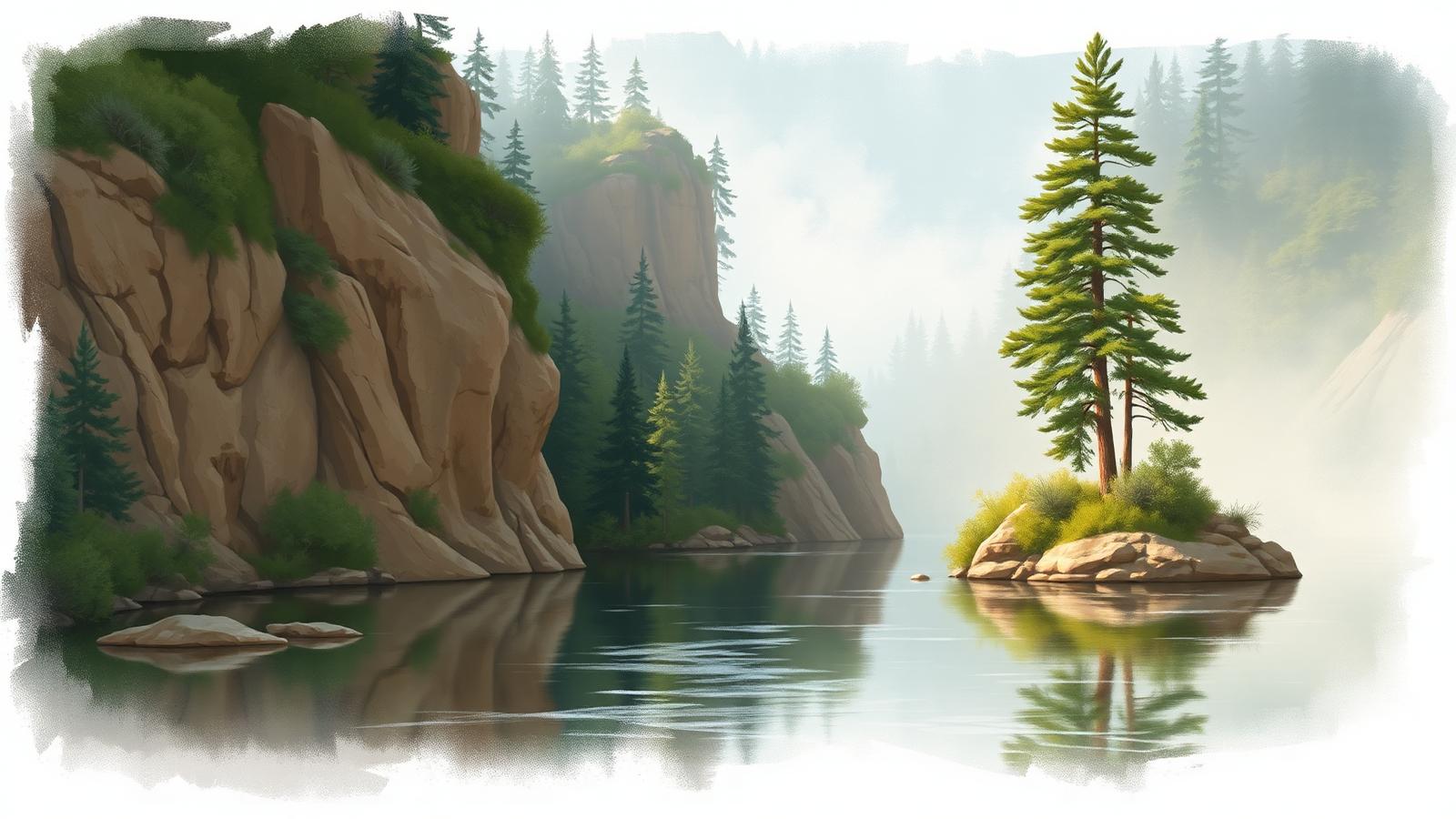
Illustrative AI-generated scene of a shallow river passing sandstone cliffs and wooded banks in central Europe

River cruise system

Elbe River Cruises

The Elbe runs from Bohemia across northern Germany to the North Sea. Cruising it links Prague, Dresden and Berlin's hinterland along a mostly free-flowing river — the least engineered and the most water-dependent of the major European cruise rivers.

The short answer

The Elbe is the outlier among European cruise rivers. Almost all of its German length is free-flowing: no barrages, no chain of locks, and therefore no way to hold the level up when the weather does not cooperate. This single fact shapes everything about cruising it.

The route itself is rich. Prague at one end, the sandstone towers of Saxon Switzerland at the border, Dresden and Meissen in the Elbe valley, Wittenberg and Magdeburg on the plain, and Hamburg at the tidal end.

At a glance

Where it runs
Czechia and northern Germany, from Bohemia to the North Sea
Length
About 1,090 km from source to the North Sea
Countries
Czechia, Germany
Cruised stretch
Prague or Dresden downstream to Magdeburg and Hamburg
Season
Roughly April to October, subject to water levels
Main start and end points
Prague (via Mělník), Dresden, Berlin by road, Hamburg

The Elbe as a corridor

  1. River

    Elbe

    Czechia and northern Germany, from Bohemia to the North Sea

  2. Cruised stretch

    Prague or Dresden downstream to Magdeburg and Hamburg

  3. Stretches

    2 in downstream order

    Bohemian Elbe and Saxon Switzerland → Lower Elbe

  4. Places along it

    7 cities and stops

    Listed in downstream order further down this page.

Why a river is not a region

One waterway, in a fixed order

A cruise region can be entered from several directions. A river corridor can only be travelled upstream or downstream along the same line.

In return for the risk, the Elbe is quiet. Between Dresden and Magdeburg the banks are floodplain meadow and biosphere reserve rather than industry, and there is far less freight traffic than on the Rhine.

The Elbe corridor

The river's own course, with the cities river cruises use. Select a stretch to focus on it.

GERMANYCZECHIAPragueDěčínDresdenMeissenLutherstadt WittenbergMagdeburgHamburg

Every city on the map

  • PragueCzechia, start or end point, serving Boarding is usually at Mělník, downstream on the Vltava.
  • DěčínCzechia, stop along the way.
  • DresdenGermany, stop, and a start or end point.
  • MeissenGermany, stop along the way.
  • Lutherstadt WittenbergGermany, stop along the way.
  • MagdeburgGermany, stop along the way, serving Berlin and Potsdam are reached by road from this part of the river.
  • HamburgGermany, start or end point.

The line is the river's own course, not the track of any voyage. Cities are the ones needed to understand the corridor, not a complete list of everywhere a vessel can tie up.

What cruising the Elbe actually means

Free-flowing and shallow
The German Elbe has no barrages to regulate depth. In a dry summer the fairway can become too shallow for cruise vessels for weeks at a time.
Purpose-built shallow-draught vessels
Ships used here are designed with unusually shallow draught and are smaller than on the Rhine or Danube, precisely because of the water-level problem.
Two capitals reached from the river
Prague is joined by the Vltava at Mělník, and Berlin and Potsdam are reached by road from the middle Elbe. Neither city lies on the cruised river itself.
A quiet, natural corridor
Long reaches run through floodplain meadow and biosphere-reserve landscape with little settlement and modest freight traffic.
One dramatic scenic stretch
The sandstone gorge of Saxon Switzerland and Bohemian Switzerland, either side of the border, is the visually distinctive part of the route.
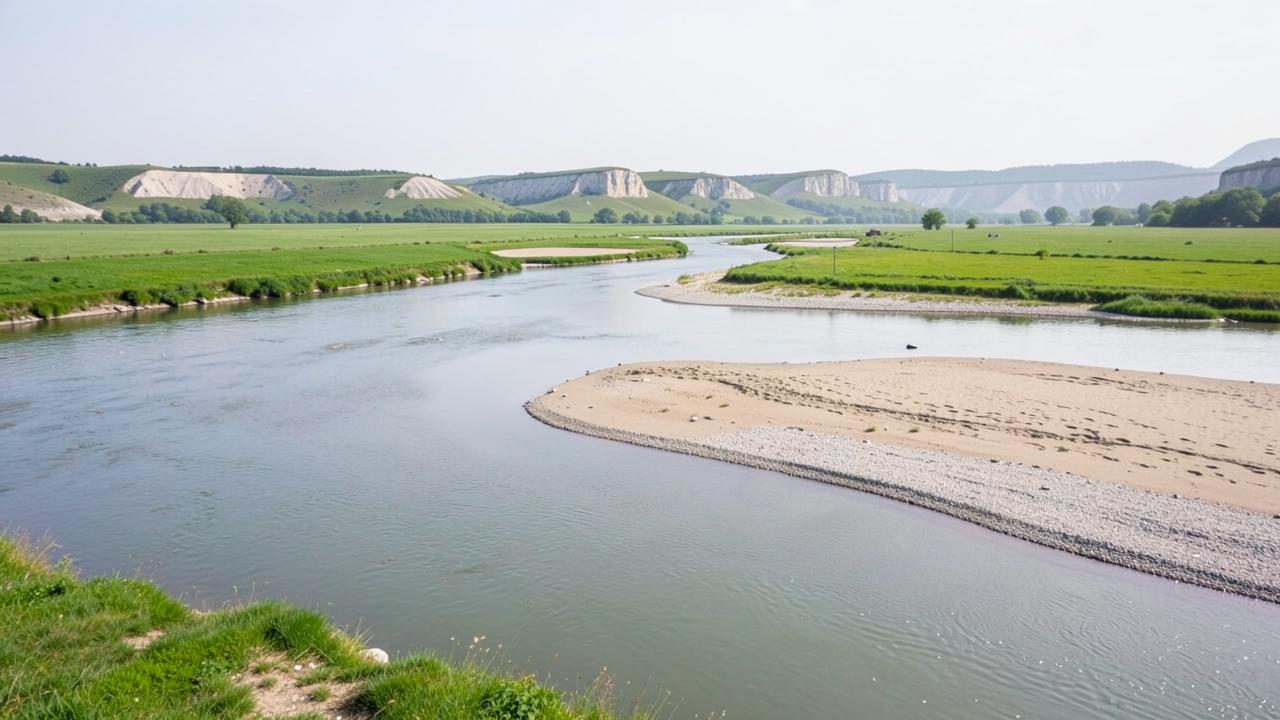
A wide shallow river at low water with exposed sandbanks and flat green banks
An unregulated river shows its water level: exposed sand and gravel bars are the visible form of the constraint that governs navigation here.

Why the Elbe is the one European river where water level is a real variable

Most of the classic European cruise rivers have been canalised: a chain of weirs and locks holds the water at dependable levels, so navigation is largely independent of the weather. Long stretches of the Elbe were never engineered that way. The river runs closer to its natural state, and its depth follows rainfall and snowmelt.

That single difference shapes everything about cruising here. Vessels built for the Elbe are shallower in draught and lower in profile than the standard European river ship, because they have to work in less water and pass beneath fixed bridges when the level is high.

It also means an Elbe itinerary carries a genuine risk of change. In a dry period the river can fall too low for a section to be sailed, and the usual response is a coach transfer to rejoin the vessel or to reach the next town. This is a documented characteristic of the river rather than a failing of any operator, and it is the first thing to understand before comparing Elbe voyages.
  1. Rainfall and snowmelt

    Set the water level

    Largely unregulated flow rather than a held pool.

  2. Water level

    Sets available depth

    Determines which sections a hull can pass.

  3. Depth

    Sets the vessel

    Shallow-draught, low-profile ships built for this river.

  4. Conditions

    Can change the itinerary

    Land transfer or altered routing in a dry period.

The main stretches

A river has an order rather than fuzzy edges. These are the stretches the corridor divides into, in the direction the water flows.

Bohemian Elbe and Saxon Switzerland

Prague and Mělník downstream through the sandstone gorge to DresdenCzechia, Germany

The upstream end of the cruised Elbe, reached from Prague via the Vltava. Below the border the river cuts through the sandstone towers and cliffs of Saxon Switzerland before reaching Dresden and Meissen.

Navigation: The Czech reach is locked and regulated; the German reach below Bad Schandau is free-flowing and shallow, and this is where low water bites first.

Lower Elbe

Dresden through Wittenberg and Magdeburg to HamburgGermany

A broad, quiet, largely undeveloped river running through the north German plain, with wide floodplain meadows and biosphere-reserve wetlands. Cities are widely spaced and Berlin and Potsdam are reached by road from the river.

Navigation: Free-flowing and unregulated for almost its whole German length, which makes the Elbe the most water-level-sensitive of the cruised European rivers.

Cities and stops along the river

The main places along the corridor, in downstream order within each stretch.

Cities and stops used by Elbe river cruises
PlaceCountryStretchRoleWhy it matters
PragueCzechiaBohemian Elbe and Saxon SwitzerlandStart or end pointNot on the Elbe itself. Voyages that begin here join the river via the Vltava.
DěčínCzechiaBohemian Elbe and Saxon SwitzerlandStop along the wayThe last Czech city before the border and the sandstone gorge.
DresdenGermanyBohemian Elbe and Saxon SwitzerlandStop, and a start or end pointThe main upstream gateway on the German side, with moorings below the historic terrace.
MeissenGermanyBohemian Elbe and Saxon SwitzerlandStop along the wayA small Elbe town above Dresden, long associated with porcelain production.
Lutherstadt WittenbergGermanyLower ElbeStop along the wayA town on the lower Elbe associated with the Reformation.
MagdeburgGermanyLower ElbeStop along the wayServes Berlin and Potsdam are reached by road from this part of the river.
HamburgGermanyLower ElbeStart or end pointThe downstream end of the corridor, where the river becomes a tidal seaport.

How voyages are structured

The shapes voyages take along this corridor: where they start, which way they run and how far they reach.

Prague to Berlin or Hamburg

The full corridor, joining the Elbe from the Vltava and running downstream across Germany, in either direction.

Dresden-based Saxony voyages

Shorter itineraries concentrated on the Elbe valley between the Czech border, Dresden, Meissen and Torgau.

Berlin and Potsdam land extensions

Voyages that pair the middle Elbe with road time in Berlin and Potsdam, which are not on the river.

When voyages operate

Late spring and early autumn are usually the most dependable periods for depth, since snowmelt and rainfall keep the river fuller.

High summer is the most likely time for low water, and prolonged dry spells can force itinerary changes or coach substitutions for whole sections.

There is no December cruise pattern of any size on the Elbe.

Cruise activity through the year — the Elbe
Essentially no cruisesShoulder periodPeak cruise activity
Read this as a table
Relative cruise activity by month in the the Elbe cruise region
MonthCruise activity
JanEssentially no cruises
FebEssentially no cruises
MarEssentially no cruises
AprShoulder period
MayPeak cruise activity
JunPeak cruise activity
JulShoulder period
AugShoulder period
SepPeak cruise activity
OctPeak cruise activity
NovEssentially no cruises
DecEssentially no cruises

An indicative pattern of when voyages operate, drawn from waterway and season information rather than any operator's schedule. Actual sailings here depend on water level.

Practical conditions that shape a voyage

Conditions on this river that can change what actually happens on a voyage.

Water level is the defining risk

Of all the European cruise rivers, the Elbe is the most likely to have voyages modified or partly replaced by road transport because of depth. Gauge readings are published by the German waterway service.

Ask what happens if the river is too low

Operators handle this differently — hotel substitution, coach touring, vessel swaps. What matters is that the answer is stated before booking.

Prague and Berlin are land components

Both are major parts of many Elbe itineraries and neither is reached by the vessel. The time ashore is road-based.

Smaller ships, fewer facilities

Shallow-draught vessels are smaller than the European norm, which is a direct consequence of the river rather than a market segment.

What to know about the Elbe

Key facts

  • About 1,090 km long, from the Czech Krkonoše mountains to the North Sea.
  • Almost the entire German reach is free-flowing and unregulated.
  • Vessels are purpose-built with shallow draught for this river.
  • Prague is reached via the Vltava; Berlin is reached by road.
  • The Saxon and Bohemian Switzerland sandstone gorge lies either side of the border.
  • Water levels are published publicly by the German waterway information service.

What to check when comparing voyages

  • What the operator commits to if water levels prevent normal sailing.
  • How much of the itinerary is on the river and how much is on land.
  • Whether Prague and Berlin are hotel stays rather than river stops.
  • Which months are being offered, since depth varies through the season.
  • That Elbe vessels are smaller than Rhine or Danube ships by design.
  • Danube river cruises

    A west-to-east corridor from Germany to the Black Sea, cruised mainly between Passau, Vienna, Budapest and the Danube Delta.

  • Rhine river cruises

    A south-to-north corridor from Basel to the Dutch delta, built around the Upper Middle Rhine Valley gorge.

  • Seine river cruises

    A short French corridor from Paris downstream through Normandy to Rouen and the Seine estuary.

  • Rhône & Saône river cruises

    A north–south French corridor from Burgundy through Lyon to Provence and the Camargue.

  • Douro river cruises

    A short Portuguese valley from Porto upstream through the terraced Alto Douro wine country to the Spanish border.

  • Main and the Main–Danube Canal river cruises

    The German connecting corridor from the Rhine at Mainz through Franconia and the Main–Danube Canal to Kelheim.

  • Moselle river cruises

    A narrow German wine valley from the Rhine at Koblenz upstream past Cochem and Bernkastel to Trier and Luxembourg.

  • Nile river cruises

    A short Egyptian reach between Luxor and Aswan linking the temple sites, plus a separate Lake Nasser circuit.

  • Mekong river cruises

    A Vietnam–Cambodia corridor from the Mekong delta through Phnom Penh towards the Tonlé Sap and Angkor.

  • Mississippi river cruises

    The long North American corridor from New Orleans upstream to St. Paul, with Ohio and Cumberland connections.

  • Columbia & Snake river cruises

    A Pacific Northwest corridor from Astoria and Portland through the Columbia Gorge and up the Snake to Idaho.

  • How river cruising differs from ocean cruising

    The structural differences: locks, water level, city-centre mooring and no sea days.

Sources & verification

Facts on this page are taken from the sources below. Cruise lines are used only as sources for facts about their own operations, never as sources of independent assessment.