Ships
What ship size actually changes
Size is usually presented as a taste: big ships or small ships, and which kind of person you are. It is more useful as a physical variable with a limited and specifiable set of effects.
The short answer
Ship size determines some things. It merely correlates with others. The dimensions of a hull decide where the vessel can physically go, because canals, channels, berths and bridges are published envelopes and a ship either fits or does not. The number of people aboard triggers a separate set of consequences, because several important rules count passengers rather than metres. Many other properties commonly attributed to size — service, food, atmosphere, inclusions and price — are not determined by size. They are primarily operator and market choices.
This guide keeps those three categories apart, names the rule or the envelope behind each claim, and states plainly where a widely repeated claim has no mechanism behind it.
By The SnapVoyages TeamPublished September 2026
The reading key
Three different kinds of claim about size
Most confusion about ship size comes from moving between these three without noticing. Each one has a different test, and only two of them are about size at all.
Class 1
Physical necessity
A published envelope exists — a dimension, a depth, a clearance — and the ship either fits inside it or does not.
Here size is the cause. No operator decision, service model or price can move a hull through a lock chamber that is shorter than the hull.
Class 2
Scale effect
The consequence follows from the number of people aboard, either by regulation or by arithmetic.
Here the operative variable is the headcount, not the tonnage. Two ships of similar volume can fall on opposite sides of a rule that counts passengers.
Class 3
Commercial choice
The property is not determined by size: no physical envelope or rule fixes it, and it can differ between two ships of the same dimensions.
Service level, food, inclusions, atmosphere and price are primarily operator and market choices. They travel alongside size in the brochures; they are not produced by it.
The usual comparison presents a list of differences and lets the reader assume a single cause. But the items on that list do not share a mechanism. A lock chamber is a physical fact. A landing limit is a rule about people. A restaurant concept is a commercial decision. Once they are separated, the question "does size matter?" stops being a matter of opinion, because each individual claim can be tested.
One consequence worth stating early: this guide does not define universal small, medium or large categories. Different regulations use their own thresholds for specific purposes, but those do not create a general classification of cruise ships. Numbers appear on this page only where a published rule uses that number.
Step 1
What the published numbers actually measure
Four figures are used to describe ship size. They measure different things, and three of the four are routinely read as something they are not.
Gross tonnage (GT)
Under the IMO's 1969 Tonnage Convention, gross tonnage is a measure of the total enclosed volume of a ship, calculated by formula and expressed as a dimensionless figure.
What it supports
Comparing how much enclosed volume two ships contain, and tracking the growth of that volume over a generation of ships.
What it cannot support
It is not a weight, not a passenger count and not a measure of deck space. Enclosed volume can rise — more indoor venues, more machinery space, more crew accommodation — without a single berth being added.
Passenger capacity
May be reported on a lower-berth/double-occupancy basis, or under another operator-defined capacity measure. It should not automatically be read as the actual number of people aboard a particular sailing.
What it supports
Comparing the intended scale of a ship, and testing it against rules that count people.
What it cannot support
It is not the number of people on board on a given day, and it excludes crew. Where a rule counts persons on board, crew are part of that number.
Passenger space ratio
An industry convention, not a regulated statistic: gross tonnage divided by the number of lower berths. It expresses enclosed volume per berth as a single comparable figure.
What it supports
A like-for-like comparison of how much enclosed volume a ship carries per berth, which is a real and consistently calculated difference between ships.
What it cannot support
It does not measure crowding, personal space or comfort. The volume in the numerator includes machinery spaces, crew areas and back-of-house that no passenger occupies, and it says nothing about how many people are in one venue at one moment. It also does not track hull size: small ships market high ratios as a differentiator, and some very large ships publish competitive ones.
Length, beam, draught and air draft
Four linear measurements: how long the hull is, how wide, how deep it sits, and how high the highest fixed point stands above the water.
What it supports
The only figures that answer the access question directly, because published envelopes are written in exactly these terms.
What it cannot support
They say nothing about what is inside the ship. Two hulls with similar dimensions can hold very different volumes, capacities and products.
Why is passenger space ratio so often misread?
Because it looks like a measurement of space per person, and it is not quite that. Space ratio divides gross tonnage by the number of lower berths, and gross tonnage is total enclosed volume: engine rooms, galleys, crew accommodation, stores and machinery spaces are all inside the number, along with the lounges and the cabins.
So the ratio is a genuine, consistently calculated comparison of enclosed volume per berth. Two ships with different ratios really do carry different amounts of volume for each berth sold. What it cannot tell you is how a specific room feels at a specific moment, because that depends on how many people are in that room, how the space is distributed and how the ship is scheduled — none of which are inputs to the calculation.
Gross tonnage is volume, not weight
Under the 1969 IMO Tonnage Convention, gross tonnage is a formula-derived measure of enclosed volume. A ship can gain gross tonnage without gaining a single passenger.
Step 2 · Physical necessity
Dimensions decide where the vessel can be
This is the part of the subject where size is unambiguously the cause. Every constraint here is published in linear measurements, and a hull either satisfies them or it does not.
Lock chamber
Length, beam and draught
The Panama Canal Authority publishes maximum vessel dimensions for the Neopanamax locks, including a maximum length overall of 370.33 m and a maximum draught expressed in tropical fresh water.
A lock is a box. A hull longer, wider or deeper than the published box does not transit, and the two oceans are then joined for that ship only by a route around a continent.
Canal section
Beam traded against draught
The Suez Canal Authority's Rules of Navigation publish a table pairing permitted beam against permitted draught rather than a single maximum size.
Because a channel has a cross-section rather than a doorway, the permitted draught depends on how wide the ship is. Two ships of comparable overall size can get different answers to the same passage.
Berth and channel
Length and draught
A port can only take a ship it has quay length and water depth for; where it does not, the call is worked at anchor or does not happen.
This is the most common size filter in the world, and it is almost never published as a headline. It appears instead as a tender call on an itinerary, or as the absence of a place from every itinerary in a region.
Overhead clearance
Air draft
Fixed bridges impose a height limit that does not vary with the operator's intentions, and on inland waterways the limit moves with the water level.
Height is the constraint that decides what a river vessel can look like at all: low profile, shallow draught, and a length and beam set by the locks it must pass.
Routing restriction
Ship size, as defined in the decree
An Italian government decree approved in April 2021 and effective from August 2021 removed large cruise ships from the Giudecca Canal and St Mark's Basin routing, directing them to Marghera instead.
Access can be withdrawn by rule as well as by depth. The water did not change; the permission attached to a class of ship did.
Emission requirement
Ship size, as the phase-in threshold
Norwegian requirements for the World Heritage fjords are phased by ship size, with zero-emission requirements applying on different timelines to different size groups.
Here size is written into the regulation itself, so it decides when a rule starts applying to a given ship rather than whether a hull physically fits.
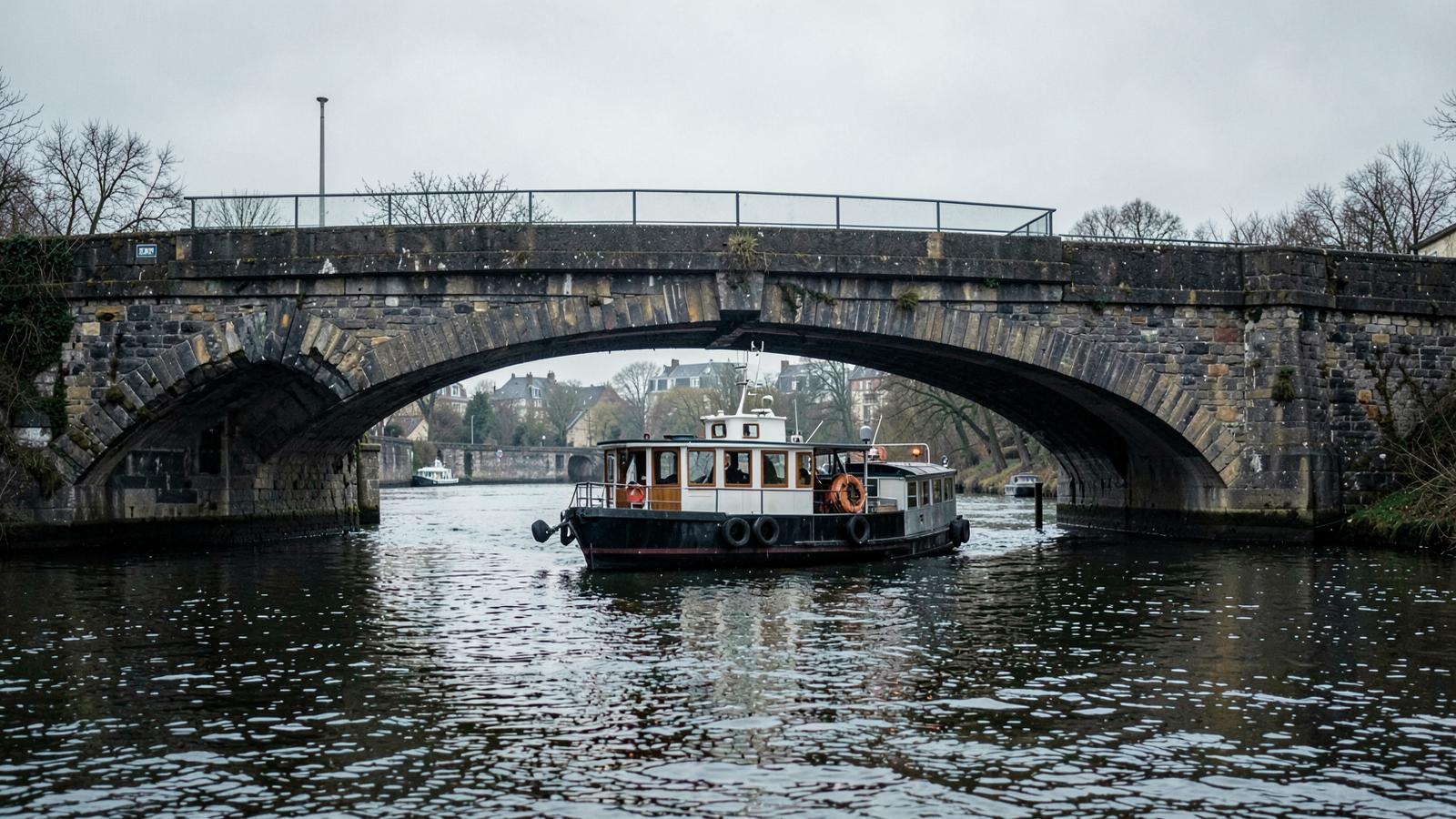
Note what this class of constraint does and does not establish. It establishes that a given ship can or cannot be scheduled in a given place. It establishes nothing at all about what the ship is like once you are aboard it. A vessel dimensioned by a lock chamber is not thereby a better or worse vessel; it is a vessel that fits a lock chamber.
It is also the reason the same coordinates can be a berth call for one ship, an anchor call for another and unreachable for a third. Where that filtering comes from, and how it shapes whole regions, is the subject of how cruise geography shapes your voyage. This guide takes the ship's side of the same relationship.
Step 3 · Scale effect
Some rules count people, not metres
This is where the thesis becomes testable. Several of the most consequential rules in cruising are written in passengers or in persons on board, which makes them independent of the hull's dimensions.
Counts: Passengers carried
IAATO's general guidelines state that vessels with more than 500 passengers shall not make landings in Antarctica.
This is the clearest evidence that size and headcount are different variables. The rule does not measure the hull. A ship crosses the threshold by carrying one more passenger, whatever its tonnage or length.
Counts: Passengers ashore at one moment
A maximum of 100 passengers may be ashore from a vessel at any one time, unless site-specific guidance requires fewer, and landings maintain a 1:20 guide-to-passenger ratio. Only one ship may visit a site at any one time.
The cap is on simultaneous presence, so a larger passenger complement is rotated through the same 100 places. A larger complement therefore requires more rotation capacity, more time, or fewer and shorter individual landing opportunities within a fixed operating window.
Counts: Persons on board, crew included
Under SOLAS Chapter III, survival craft capacity is set as a proportion of the persons on board, with lifeboats on each side for a stated share of that number and permitted liferaft substitution.
A safety requirement that scales with people, not with hull dimensions. Required survival-craft capacity therefore scales with the persons the ship is certified to carry, rather than directly with its hull dimensions.
Counts: Vessel entries
Entry to Glacier Bay is limited by federal regulation, with entries allocated by vessel category and season.
This one counts ships, not people and not metres. A place can be scarce for reasons that have nothing to do with how large the ships wanting to enter it are.
Counts: Port calls per year
Amsterdam's city council resolved in 2024 to cap cruise calls at the city-centre terminal at 100 ships per year from 2026, with the terminal to be phased out by 2035.
A cap on calls prices access in slots rather than in metres. Which ships take those slots becomes a commercial and scheduling question, not a dimensional one.
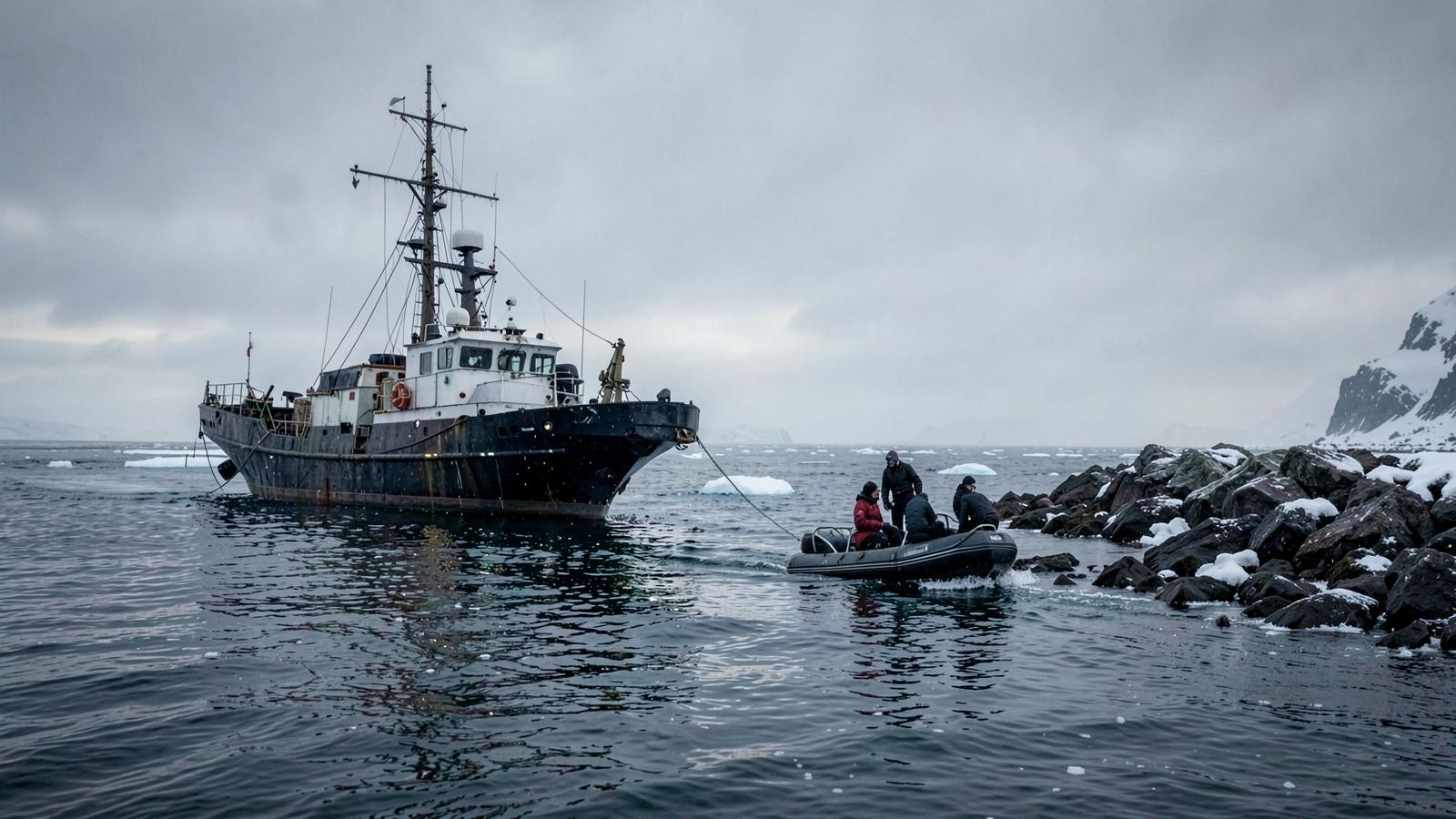
The Antarctic rules are the clearest available demonstration that passenger count and ship dimensions are different variables. A vessel does not become unable to land people because it is long or voluminous. It becomes unable to land people because it carries more than 500 of them. That is a rule about the size of the group, and it produces the observable pattern — landing operations run from ships with small passenger complements — for a reason that has nothing to do with tonnage.
The SOLAS requirement works the same way from the opposite direction: survival craft capacity is a proportion of persons on board, so it scales with the people, not with the hull. And the Glacier Bay and Amsterdam examples add a third variant, where what is being counted is neither people nor metres but entries and calls.
Passenger count and ship dimensions are not the same variable
They usually move together, which is why they are so easily confused. When a rule is written, only one of them is doing the work — and it is worth knowing which.
Step 4 · Arithmetic
Moving people takes time in proportion to how many there are
Gangways, tenders and turnaround are not opinions about size. They are throughput problems, and the number of people is in the numerator.
Moving people off a ship: a worked model, not a measurement
The capacities and cycle times below are assumptions chosen to make the arithmetic legible. Real tender capacities, gangway numbers and clearance procedures vary by ship, port and day. What does not vary is the shape of the relationship: the number of people is in the numerator.
Model A — smaller complement
200 people ÷ (100 per cycle × 2 in parallel) × 30 min ≈ 30 min
One round of movement clears the ship. Ashore-time lost to the transfer is close to the transfer itself.
Model B — mid complement
1,200 people ÷ (100 per cycle × 4 in parallel) × 30 min ≈ 90 min
Movement becomes a staged operation with an order and a queue. The last group ashore has a materially shorter call than the first.
Model C — larger complement
4,000 people ÷ (100 per cycle × 6 in parallel) × 30 min ≈ 210 min
At this scale a tender operation stops being incidental to the day. It is why large ships are usually scheduled where a berth exists, rather than where a transfer would be required.
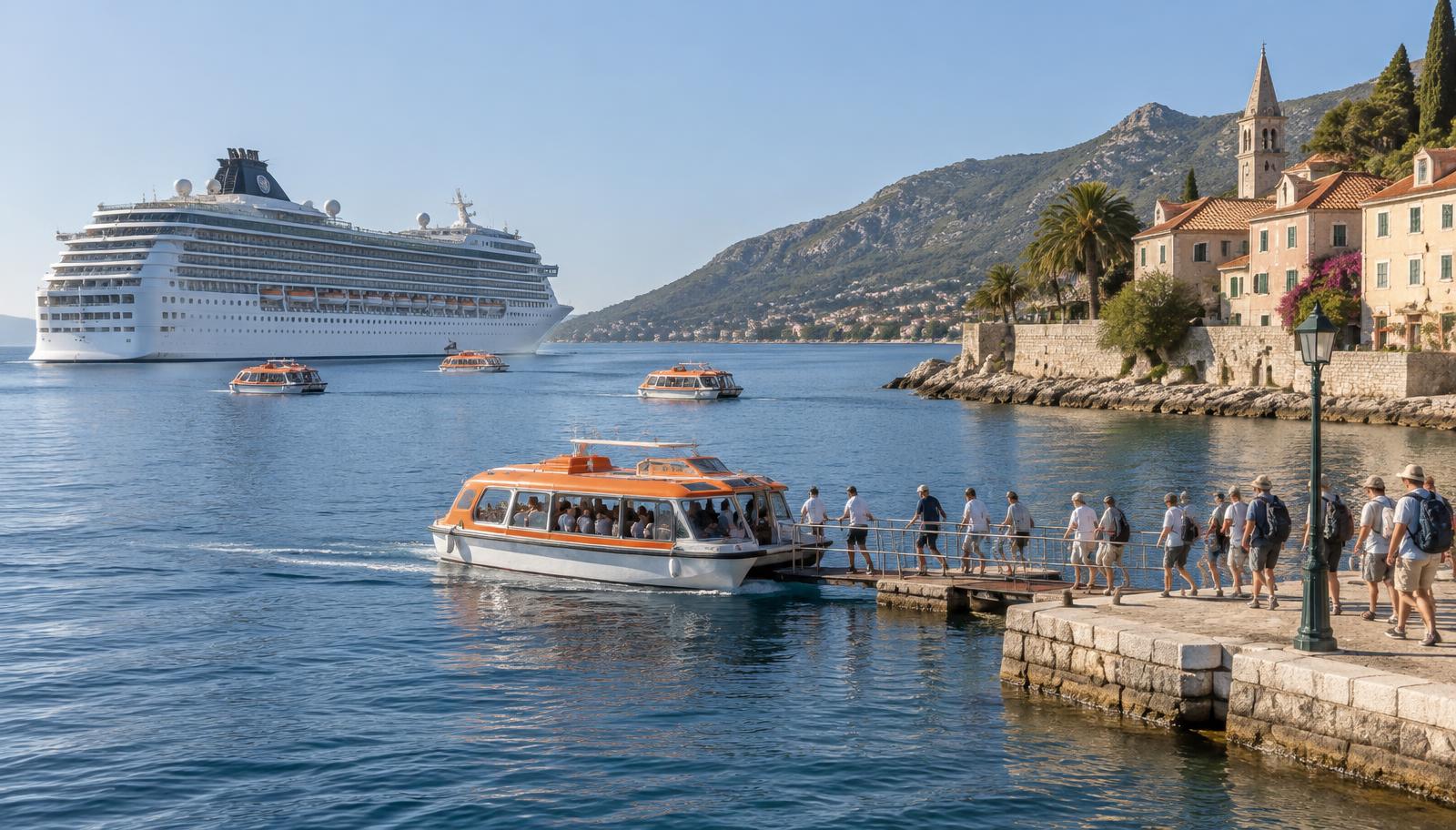
The figures in the model above are assumptions, chosen so the arithmetic can be followed. No port authority publishes a formula of this kind, and the real numbers vary with the ship's boats, the port's gangways, the tide, the clearance procedure and the weather. What does not vary is the direction: doubling the people either doubles the time or requires twice the capacity to move them.
This is a scale effect, not a physical necessity, and it is worth being precise about what it implies. It does not imply that a larger ship offers less time ashore, because operators plan around exactly this: berths are secured, calls are lengthened, and transfers are organised. It implies that the operation exists, that it has to be planned, and that a published itinerary marked as a tender call is describing a longer process for a ship carrying more people. How the hours of a port call are actually spent belongs to how to read a cruise itinerary.
Three published figures
What real ships publish, and what each figure answers
Three confirmed figures, used to make the metrics concrete. They are not a ranking and not three size classes — each one illustrates a different point about which number is doing the work.
Published figure
248,663 GT
Icon of the Seas
A figure for enclosed volume, and nothing else. It does not state a weight, a passenger number or a deck area, and on its own it cannot answer whether the ship can enter a given port.
Published figure
138 guests, 76 cabins, PC5 polar class hull
National Geographic Endurance
Published as a passenger number and a hull capability rather than as a size. Both of those are the variables that the rules governing polar operation actually use.
Published figure
190 guests, 53 crew, 443 ft (about 135 m)
Viking Longship (Idun class)
A length that exists because the locks and bridges of a river system exist. The vessel was dimensioned by the waterway before any decision about the product was taken.
Read across the three and different figures answer different questions. Icon of the Seas' gross tonnage describes enclosed volume. National Geographic Endurance's guest count and polar class describe passenger scale and hull capability. The Viking Longship's length can be compared directly with the dimensional constraints of its waterway.
None of these figures is more honest than the others, and none of them can be converted into the experience of sailing on the ship. They answer access and regulation questions, which is what they are for.
Step 5 · Commercial choice
What size does not cause
The largest category of size claims in circulation is not determined by size. Rather than argue with each one, the table names the mechanism where there is one, and says so where there is not.
| The claim | Mechanism | What is actually going on |
|---|---|---|
| Big ships feel crowded. | Not caused by size | Perceived density depends on how many people are in a particular venue at a particular moment, and on how the decks are laid out. Gross tonnage does not establish either. A ship with more volume may also have more places to put people. |
| Small ships are more intimate and personal. | Not caused by size | This tracks the service model and staffing the operator chose, which correlates with the market segment small ships tend to occupy. It is not produced by the hull. |
| Bigger ships are more stable. | Not caused by size | Motion depends on hull form, stabiliser fit, loading and the sea state encountered. Tonnage alone does not establish it, and no source reviewed for this guide supports the claim in general form. |
| Gross tonnage tells you how heavy a ship is. | Not caused by size | Gross tonnage is a measure of enclosed volume under the IMO convention. It is not a weight, despite the word tonnage. |
| A higher space ratio means it feels roomier. | Not caused by size | Space ratio is enclosed volume per berth. It is a valid comparison of volume accounting, including machinery and crew areas, and it is not a validated measure of how a public room feels when a show ends. |
| Small ships can go where big ships cannot. | Partly, with conditions | True wherever a published envelope or a headcount rule binds — a lock, a depth, a bridge, a landing limit. Everywhere else, the difference in where ships go is a route-design decision, not a physical one. |
| A bigger ship means a bigger crew. | Not caused by size | Crew numbers are an operator decision within the applicable manning and safety requirements, and this guide publishes no crew-ratio table. Hull dimensions alone do not establish the figure. |
| A large ship cannot land people in Antarctica. | Caused by headcount | The rule is written in passengers, not in metres: vessels carrying more than 500 passengers do not make landings, and no more than 100 passengers are ashore at one time. |
| Ship size decides which ports appear on the itinerary. | Caused by size | Where a lock dimension, a channel depth, a berth length or a bridge clearance binds, the hull's measurements decide the answer before anything else does. |
| Big ship means worse food and service. | Not caused by size | Catering and service standards are not determined by enclosed volume. This is commercial positioning, and it varies within every size of ship. |
The consistent error in the popular version of this subject is treating correlation as causation across a market. Ships with few passengers tend to belong to operators serving a segment that staffs and prices differently, so the two travel together often enough to look like one thing. But the connection runs through the market, not through the hull. Change the operator and the same dimensions produce a different product.
That is why this guide refuses the framing of a winner. There is nothing to rank here: one set of dimensions opens some places and closes others, one passenger complement triggers some rules and not others, and everything else is a decision someone made. What a fare in either case contains is a separate question, taken up in what does a cruise really cost.
Sources & verification
Envelopes are cited from the authorities that publish them, headcount rules from the regulators and operator associations that write them, and metric definitions from the IMO conventions that define them. Ship figures are limited to those confirmed from builder or operator sources; where a widely circulated figure could not be confirmed, it is not published here. The throughput arithmetic is an explicit model and is labelled as such.
- IMO — International Convention on Tonnage Measurement of Ships, 1969 — read 2026-09-01
- IMO — SOLAS Chapter III, life-saving appliances and arrangements — read 2026-09-01
- Panama Canal Authority — vessel requirements and Neopanamax dimensions — read 2026-09-01
- Suez Canal Authority — Rules of Navigation — read 2026-09-01
- Library of Congress Global Legal Monitor — Italy: decree removing large cruise ships from the Venice lagoon routing — read 2026-09-01
- Norwegian Maritime Authority — requirements for vessels in the World Heritage fjords — read 2026-09-01
- Norwegian Government — zero-emission requirements in the World Heritage fjords — read 2026-09-01
- Municipal Port Fund of Thira — Santorini ports — read 2026-09-01
- Municipal Port Fund of Thira — cruise ship berthing policy 2025–2026 — read 2026-09-01
- Central Commission for the Navigation of the Rhine (CCNR) — read 2026-09-01
- viadonau — Austrian waterway administration — read 2026-09-01
- Wasserstraßen- und Schifffahrtsverwaltung des Bundes (Germany) — read 2026-09-01
- IAATO — International Association of Antarctica Tour Operators — read 2026-09-01
- Secretariat of the Antarctic Treaty (Visitor Site Guidelines and ATCM measures) — read 2026-09-01
- 36 CFR §13.1160 — Glacier Bay vessel quotas and operating requirements — read 2026-09-01
- U.S. National Park Service — Glacier Bay National Park and Preserve — read 2026-09-01
- Gemeente Amsterdam — city council decision on limiting sea cruise calls — read 2026-09-01
- International Maritime Organization — Polar Code — read 2026-09-01
- Meyer Turku shipyard — Icon of the Seas project data — read 2026-09-01
- Ulstein — National Geographic Endurance reference vessel — read 2026-09-01
- Lindblad Expeditions — official website (expedition cruising) — read 2026-09-01
- Viking — official website (inclusive value) — read 2026-09-01